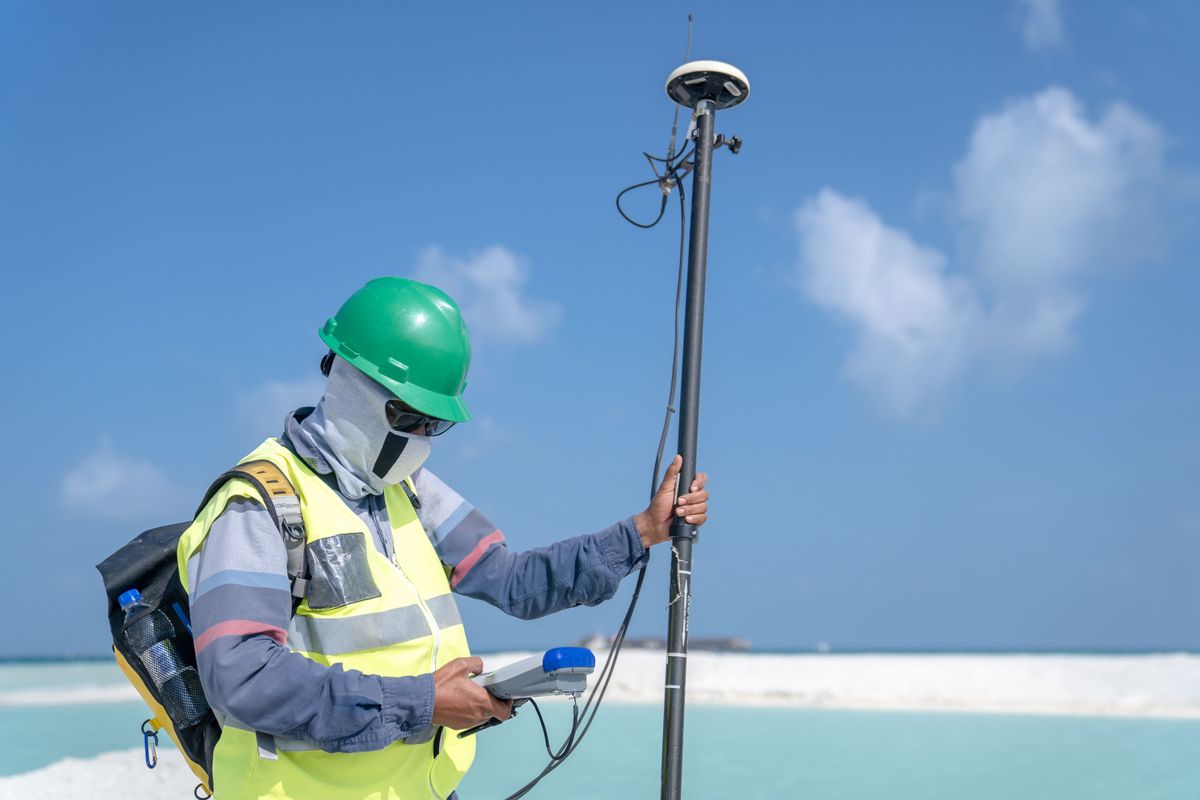
Before any borehole contractor arrives on your property with a rig, there is one step that separates a professional operation from a speculative one: the geophysical survey. This non-invasive surface investigation tells you where the water is, before a single metre of ground is disturbed.
This article explains what a geophysical survey is, how it works, what it identifies, and why skipping it is one of the most common — and costly — mistakes made in borehole projects across South Africa.
The Problem a Survey Solves
Groundwater in South Africa does not exist as underground rivers or uniform saturated layers. In most of the country's hard rock geology, water is stored in fractures, joints, fault zones, and dyke contacts within the rock. These water-bearing fractures are narrow, occur at depth, and are not uniformly distributed across your property.
From the surface, all ground looks identical. You cannot see where these fractures are. If you drill at a random location on a property, the probability of intersecting a productive water-bearing zone by chance is low — particularly in areas with deep, hard-rock formations such as Johannesburg and much of the Eastern Cape.
A geophysical survey solves this problem by giving you subsurface information before drilling begins.
How Electromagnetic Scanning Works
The most common geophysical survey method used for borehole siting in South Africa is electromagnetic (EM) scanning, often used in combination with electrical resistivity profiling.
Electromagnetic instruments transmit a low-frequency electromagnetic field into the ground. The rock formations below respond differently depending on their electrical conductivity — intact, dry rock behaves differently from fractured, water-saturated rock. The instrument measures these variations across the surface of the property.
The result is a subsurface conductivity map of your property — a profile of the rock formations at depth. Zones of elevated conductivity correlate with fracture networks that may contain groundwater. The geophysicist interprets this data to identify the most promising drilling location.
What EM Scanning Identifies
Fractured zones in hard rock · Geological contacts and fault lines · Dyke intrusions (which can block or concentrate groundwater) · Depth and orientation of water-bearing structures · Areas to avoid (zones of dry, massive rock)
What Happens During a Site Survey?
An Everest Drilling geophysical survey site visit typically follows this sequence:
- Property walkover: The geophysicist walks the property to understand its layout, identify access constraints, and note any existing boreholes, dams, or drainage features that may influence the interpretation.
- Instrument setup and traverses: The EM instrument is carried along pre-planned traverse lines across the property, taking readings at regular intervals. This covers the available area systematically.
- Data download and processing: Readings are downloaded and processed to generate conductivity profiles and subsurface maps.
- Interpretation and recommendation: The geophysicist interprets the data and identifies one or more recommended drill locations, ranked by expected productivity. The location is physically marked on site.
A typical residential or small commercial site survey can be completed in a few hours. Larger agricultural or multi-borehole projects take longer depending on the area to be covered.
What You Receive After the Survey
On completion, Everest Drilling provides a survey report documenting the findings, including:
- The recommended drill location(s), physically marked on site
- Interpreted subsurface profiles showing the identified fracture zones
- Estimated target depth range for the recommended location
- Notes on the geological conditions observed
This report forms part of the project record and gives you documented evidence of why the drill location was chosen — something no unsurveyed project can provide.
The Real Cost of Not Surveying
Some contractors offer borehole drilling without a geophysical survey, relying on visual inspection, local knowledge, or simply drilling at the most convenient point on the property. This approach saves a small amount of time and money at the start — but the consequences of a dry borehole are significant.
A dry or low-yielding borehole still costs the full drilling bill, achieves nothing, and may require re-drilling at a new location — doubling project expenditure. A geophysical survey is the single most cost-effective step in any borehole project.
The survey also protects you against a second common failure: drilling in the right general area but at the wrong angle or orientation relative to the fracture system. EM scanning identifies not just the location but the orientation of productive fracture zones — allowing the drill point to be positioned for maximum intersection probability.
Geophysical Surveys and Property Type
Survey methodology is adapted to the property and geology involved:
- Residential properties: Smaller survey area, focus on finding the single best location within the available space on the erf.
- Agricultural land: Larger survey area, often covering multiple potential sites to identify the highest-yielding option for irrigation or livestock supply.
- Commercial and industrial sites: Multi-borehole survey to identify a field of productive locations for a system capable of meeting higher volume requirements.
- Dolomite-risk areas: Special care is taken in areas where dolomite is present — the survey helps identify structurally safe drilling locations, and interpretation includes geological risk assessment.
How Everest Drilling Uses Survey Data
At Everest Drilling, the geophysical survey is not an optional add-on — it is the foundation of every project. Our drill teams work directly from the surveyed location data. The rig is positioned on the marked point, and drilling targets the fracture depth identified in the survey report. To book or enquire about our geophysical survey service, contact us for a project-specific quotation.
This integrated approach — survey by our geophysics team, drilling by our rig team, pump installation by our installation team — means the same team that identified the water is the team that drills to reach it. There is no communication gap between surveyor and driller.
Summary: Why a Survey Is Non-Negotiable
A geophysical survey is not about guaranteeing water — geology is always variable, and no survey can promise a specific yield. What it does is give you the best available information about where to drill before committing the full cost of a drilling project. It shifts the odds significantly in your favour.
Any contractor who offers to skip the survey is either unaware of good practice or is cutting corners that will ultimately be paid for by the client. Ask every borehole contractor the same question: Do you conduct a geophysical survey before drilling? The answer tells you everything about how they operate.
Related Articles
Common Questions
Book a Geophysical Survey
Everest Drilling surveys every site before a rig is mobilised. Contact us to arrange your site assessment.