Joe Gqabi District · Eastern Cape

Borehole Drilling
Aliwal North

Survey-first borehole drilling for Aliwal North (Alinovel), the Joe Gqabi District, and the surrounding farming district. Geophysical survey, drilling to 250m, solar pump systems, and overhead tanks — all from one contractor.

Geophysical Survey Drilling to 250m Solar Pump Systems Overhead Tanks
Water Independence

Borehole Drilling
in Aliwal North

Aliwal North — locally and increasingly known as Alinovel — sits in the Orange River valley at the meeting point of the Eastern Cape and Free State. It is the administrative hub of the Maletswai Local Municipality within the Joe Gqabi District, and a service centre for a broad farming hinterland that stretches across semi-arid Karoo margin country transitioning north into grassland.

Water has always defined what is possible in this corner of the Eastern Cape. The Orange River makes irrigation feasible where surface water is accessible, but the wider district is dry, and the gap between available municipal supply and actual demand — from farms, homesteads, and town properties alike — is significant. A private borehole gives landowners and farmers direct control over their water supply, removing dependence on a single infrastructure point and providing a buffer against supply disruptions during dry spells and peak demand periods.

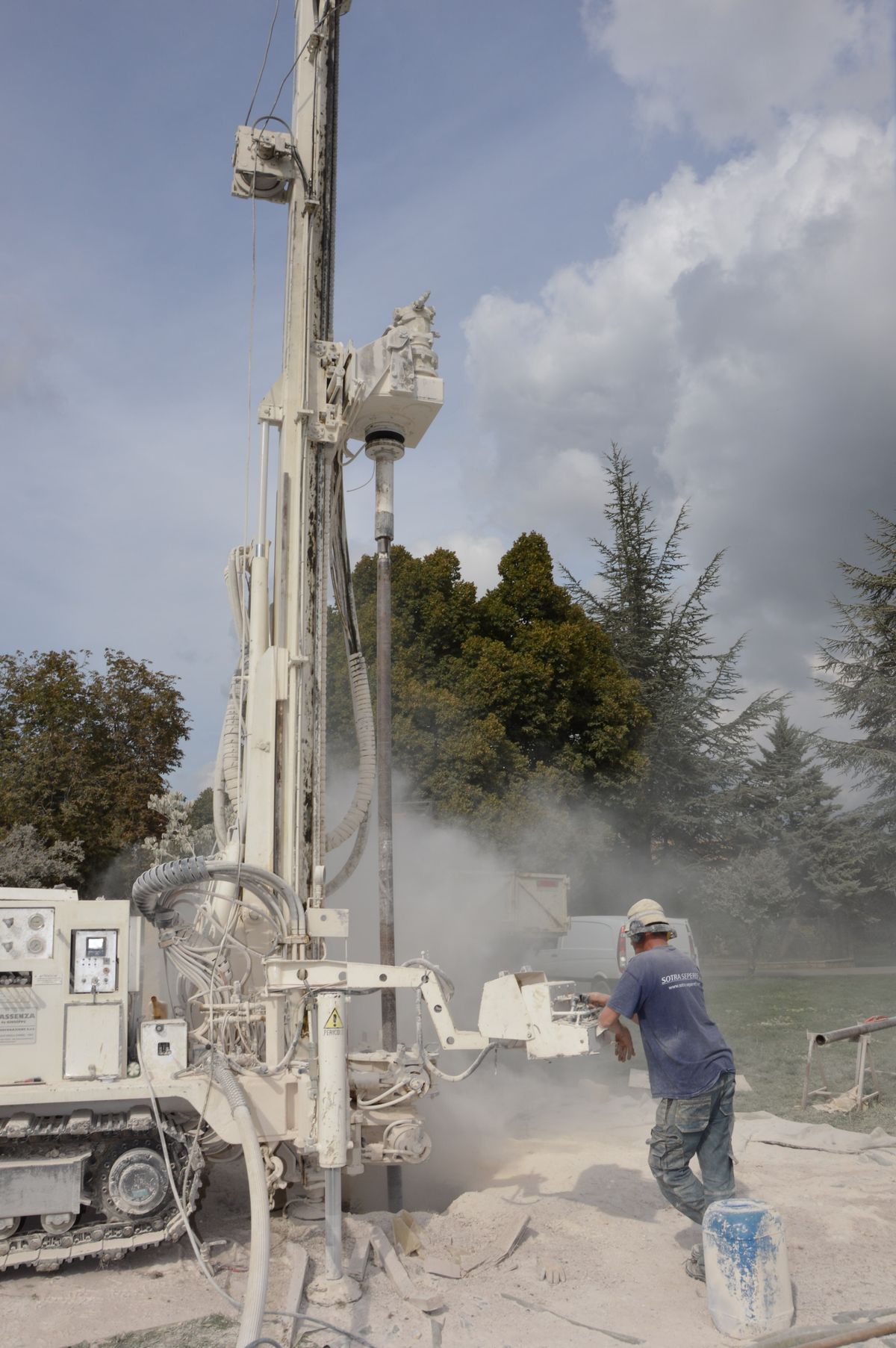
Everest Drilling provides a complete, survey-first borehole service in Aliwal North and across the Joe Gqabi District. We begin every project with a geophysical survey to locate the most productive drill site before a single rod goes in the ground, then drill to the depth the geology requires — up to 250m — and complete the installation with the pump system, overhead tank, and reticulation pipework your property needs.

Why It Matters Here

Water on
Your Terms

Livestock Farming

Cattle and sheep farming across the Joe Gqabi District depends on reliable water at every trough and dam. A borehole with a solar pump can fill stock water storage continuously through daylight hours — independent of the grid and unaffected by municipal pressures.

Irrigated Crop Farming

The Orange River valley supports vegetable production and lucerne farming. Boreholes are used as a primary or supplementary source for irrigation systems, providing on-demand water even when river allocations are restricted or seasonal flows are low.

Rural Homesteads & Town Properties

Rural properties beyond the town reticulation area depend entirely on groundwater. Even within Aliwal North, many homeowners and businesses install boreholes as a backup supply — ensuring water when municipal service is disrupted.

Local Geology

Understanding the Ground
Beneath Aliwal North

The geology of Aliwal North and the Joe Gqabi District directly shapes how boreholes are planned, how deep they need to go, and where the productive fracture zones are likely to be found. Understanding this geology is a prerequisite for a successful borehole project.

Karoo Sediments

The bedrock beneath Aliwal North and the surrounding district belongs to the Karoo Supergroup, specifically the Beaufort Group. These are ancient mudstones and sandstones deposited over hundreds of millions of years. In their undisturbed state, Karoo sediments have low porosity and hold very little water. Groundwater movement through this rock is almost entirely controlled by fractures and joints rather than the rock matrix itself.

Dolerite Intrusions

Cutting through the Karoo sediments are dolerite sills and dykes — igneous rock that forced its way into the sedimentary layers as hot magma millions of years ago and then cooled and hardened. Where dolerite meets Karoo sediment, the differential heating and cooling creates fracture zones. These contact zones are where groundwater accumulates and where Everest Drilling targets its drill programmes. Identifying dolerite contacts before drilling is a key objective of the geophysical survey.

Orange River Alluvials

Close to the Orange River itself, the geological picture changes. The river has deposited alluvial sands and gravels over time, and these unconsolidated sediments can present shallower water tables in proximity to the river corridor. For properties within reach of these alluvial deposits, shallower boreholes may be productive. Away from the river, targeting fractured Karoo rock at depth is typically required, and boreholes need to go deeper to intersect productive fractures.

Survey-First Drilling

Because every site in the Joe Gqabi District is geologically different, Everest Drilling conducts a geophysical resistivity survey before every borehole project. The survey maps subsurface resistivity variations to locate the most likely fracture zones and dolerite contacts — giving the drill programme the best possible chance of intersecting a productive aquifer. Without a survey, the drill location is essentially guesswork in Karoo geology. Borehole depth is site-specific and determined by survey results; Everest Drilling's equipment is rated to 250m. Everest Drilling guarantees the depth of the borehole as quoted and drilled.

What the Survey Measures

A geophysical resistivity survey measures how easily electrical current passes through the ground at different depths and locations. Rock and soil types respond differently: dry Karoo mudstone has high resistivity, water-bearing fractures have low resistivity, and dolerite has its own distinct signature. By mapping these contrasts, the survey produces a subsurface profile that allows the geophysicist to recommend the most productive drill site and target depth.

In practice, this means the decision of where to drill is based on evidence rather than assumption — reducing the risk of drilling to significant depth and finding little or no water. For farms in the Aliwal North district, where a dry or low-yield borehole represents a major cost and delay, this survey-first approach is the only responsible way to plan a borehole project.

Depth & Yield

In the Aliwal North area, borehole depth is site-specific. Some sites near the Orange River may find productive water at relatively shallow depths within alluvial deposits. On the broader farming land away from the river, the productive fractures in Karoo rock may be encountered at 60–150m or deeper. Everest Drilling drills to the depth the survey and geology indicate, up to our equipment limit of 250m.

After drilling reaches the target depth, a yield test is carried out. This measures how much water the borehole can sustainably produce over time — essential information for sizing the pump correctly and setting realistic expectations for how the borehole will perform in daily use, whether for stock water, irrigation, or domestic supply.

What We Do

Services Available
in Aliwal North

Everest Drilling delivers the full scope of borehole services in Aliwal North and the Joe Gqabi District — from the initial survey that chooses the drill site through to the pump, tank, and pipework that puts water where your property needs it.

Geophysical Survey Resistivity survey to map subsurface fracture zones and dolerite contacts before drilling begins. The survey output identifies the optimal drill site and target depth for the specific geology at your location.
Borehole Drilling Rotary percussion drilling to the depth indicated by the survey — up to 250m. Steel or PVC casing installed to the required depth. Borehole depth is site-specific and determined by geophysical survey. Everest Drilling guarantees the depth of the borehole as quoted and drilled.
Yield Testing Air-lift and sustained pumping tests to measure the borehole's sustainable yield — a critical input for pump selection and system design for farms and larger properties.
Pump Installation Submersible pump selection and installation matched to borehole depth, yield, and daily water demand. Grid-connected or solar-powered pump options available.
Solar Pump Systems Solar panel array, MPPT controller, submersible pump, and wiring — a complete off-grid pump system that fills your storage tank during daylight hours and provides gravity-fed supply around the clock, with no Eskom connection required.
Overhead Tank Installation Steel or plastic overhead tank on a raised stand — providing gravity-fed water pressure to the property. Sized to your daily demand and the borehole yield. Essential for load-shedding resilience.
Reticulation Pipework from borehole to tank and from tank to property or irrigation system. Municipal bypass valve installed where required to allow switching between borehole and municipal supply.
Borehole Rehabilitation Assessment and rehabilitation of existing boreholes that have reduced yield, pump problems, or casing deterioration. Includes jetting, surging, and pump replacement as required.

Service Area

Everest Drilling services Aliwal North (Alinovel) and the full Joe Gqabi District including the surrounding farming districts. Nearby towns within our operational area include:

  • Burgersdorp (Inkululeko)
  • Lady Grey
  • Barkly East
  • Jamestown
  • Surrounding farms and rural properties

Pricing

Every borehole project is unique — survey requirements, drilling depth, pump type, tank size, and reticulation scope all vary by site. Contact Everest Drilling for a project-specific quotation for your Aliwal North or Joe Gqabi District property.

Who We Serve

Who Uses Boreholes
in Aliwal North?

The demand for private borehole water in the Aliwal North area spans a wide range of property types and water needs. Here is how different users across the district approach borehole water.

Livestock Farmers

Cattle and sheep farms across the Joe Gqabi District are the largest users of borehole water in the region. Livestock require consistent water at every camp — and during dry summers or drought years, surface water sources such as farm dams dry up completely. A network of boreholes on a large farm, each equipped with a solar pump and stock tank, provides reliable water at every camp regardless of rainfall. Everest Drilling has extensive experience designing and drilling multi-borehole systems for livestock farms in the Eastern Cape.

Irrigated Crop Farmers

Vegetable and lucerne farmers in the Orange River valley use a combination of river water and boreholes for irrigation. Where Orange River access is limited or where farms are set back from the river corridor, boreholes provide the primary water source for irrigation. The viability of irrigation from a borehole is determined by yield — a borehole producing 3,000 litres per hour or more can support meaningful irrigation volumes with an appropriately sized pump and delivery system. Yield testing after drilling establishes what the borehole can sustainably produce.

Rural Homesteads

Many properties on the outskirts of Aliwal North and in the surrounding Maletswai Local Municipality area are not connected to the town's water reticulation network, or have connections that are unreliable. A borehole with a solar pump and overhead tank provides a fully self-sufficient water supply — independent of municipal infrastructure, unaffected by load shedding, and capable of supplying a family home, worker accommodation, and garden irrigation from a single borehole.

Town Properties & Businesses

Commercial and light industrial properties in Aliwal North face the same municipal supply constraints as residential users, often with higher daily water demands. A borehole installed as a backup or supplementary supply gives businesses continuity when municipal supply is disrupted. With an overhead tank system, the property can hold enough stored water to run through a supply interruption without noticing it at the tap.

Guest Farms & Accommodation

The Joe Gqabi District has a number of guest farms and country accommodation properties that depend on reliable water for visitor comfort. An unplanned water outage is disruptive for guests and damaging for the property's reputation. Borehole water with a solar pump and adequate tank storage provides a self-sufficient backup that removes water supply from the list of operational risks.

Small-Town Domestic Backup

Residents of Aliwal North town who have experienced municipal supply disruptions are increasingly installing boreholes as a domestic backup. Even a relatively modest borehole yield — enough to fill a 5,000-litre overhead tank in a day — provides a practical buffer that keeps the household running through days-long municipal outages. The solar pump option means the system works through load shedding as well.

FAQ

Common Questions
About Boreholes in Aliwal North

Do you drill boreholes in Aliwal North and the Joe Gqabi District?
Yes. Everest Drilling operates across the Eastern Cape and services Aliwal North, the surrounding Maletswai Local Municipality, and the wider Joe Gqabi District. We conduct geophysical surveys to pinpoint drill sites, drill to the depth required (up to 250m), and install the complete pump and overhead tank system. Nearby towns including Burgersdorp (Inkululeko), Lady Grey, Barkly East, and Jamestown all fall within our operational footprint.
What geology affects borehole success near Aliwal North?
Aliwal North and the surrounding Joe Gqabi District are underlain by Karoo Supergroup sediments — primarily Beaufort Group mudstones and sandstones — which are cut through by dolerite sill and dyke intrusions. The most productive borehole targets are typically fracture zones at or near the contact between dolerite and the surrounding Karoo sediments, where groundwater accumulates and moves through the rock. Closer to the Orange River corridor, alluvial deposits can present shallower water tables, but away from the river most boreholes need to target fractured Karoo rock at depth. Because each site is geologically different, a geophysical resistivity survey is essential before any drilling begins. Borehole depth is site-specific; Everest Drilling's equipment is rated to 250m.
Can I use a borehole for irrigation near Aliwal North?
Yes. The Orange River valley around Aliwal North supports irrigated vegetable and lucerne farming, and boreholes are widely used as a supplementary or primary water source for irrigation on farms in the district. The viability of irrigation from a borehole depends on the yield established during drilling — yield testing is carried out after drilling to measure the sustainable output of the borehole. Everest Drilling installs pumps and pump systems sized to the borehole's yield and the farm's daily water demand. Contact us for a site assessment and project-specific quotation for an irrigation borehole in the Aliwal North area.
How deep will my borehole need to be in the Aliwal North area?
Depth is site-specific and cannot be quoted before a geophysical survey has been carried out. Close to the Orange River, alluvial deposits may yield productive water at shallower depths. On the broader farming land away from the river — where the geology is fractured Karoo mudstone and sandstone with dolerite intrusions — productive fracture zones may be encountered anywhere from 60m to 150m or deeper, depending on the specific site. Everest Drilling's equipment is rated to 250m. The geophysical survey identifies the most likely productive depth and the optimal drill location. Everest Drilling guarantees the depth of the borehole as quoted and drilled.
Does a solar borehole pump work during load shedding?
Yes — a solar borehole pump operates entirely independently of the Eskom grid. The solar panels power the pump directly during daylight hours via an MPPT controller, filling an overhead storage tank regardless of whether the grid is on or off. The overhead tank then supplies the property by gravity around the clock. This means that even during extended load-shedding periods, the property continues to have water at the tap. Everest Drilling designs and installs solar borehole pump systems across the Joe Gqabi District, sized to the borehole yield and the property's daily demand.
Get Started

Get a Free Quote in Aliwal North

Survey-first borehole drilling for Aliwal North, the Joe Gqabi District, and surrounding farms. Contact Everest Drilling for a project-specific quotation.

Get a Free Quote WhatsApp Us
Related

More Information

Call Now WhatsApp
Chat on WhatsApp