For most South African homeowners, municipal water has always been the default. You connect to the grid, pay the account, and trust the tap. But for a growing number of property owners across the country, that trust has been eroded — by water restrictions, supply interruptions, ageing pipes, and the compounding effect of load shedding on municipal pumping infrastructure.
A private borehole offers an alternative. This article provides a practical, honest comparison of both options — without overpromising on either side.
The Case for Municipal Water
Municipal water supply has real advantages that are worth stating plainly. When the system works well:
- No upfront infrastructure required. Municipal water is available from existing infrastructure — you pay for the connection and the ongoing supply.
- Treated water delivered to the tap. Municipal water is treated at source before distribution. For drinking and cooking, it meets a supply standard.
- No maintenance responsibility on the property owner. Pipes, pumps, and treatment are the municipality's problem to manage.
For properties in well-maintained urban areas with reliable supply, municipal water remains practical. The question is whether "reliable" continues to describe reality across South Africa.
Why Municipal Supply Has Become Unreliable
South African municipalities face a documented infrastructure maintenance backlog. The combination of ageing distribution networks, deferred maintenance, population growth, and operational funding challenges has resulted in:
- Water restrictions imposed during drought periods, limiting garden irrigation, car washing, and other non-essential uses
- Planned and unplanned supply interruptions from pipe bursts, pump failures, and reservoir maintenance
- Load-shedding-driven failures — municipal pumping stations and water treatment works rely on electricity; extended outages cause supply drops or complete failures in some areas
- Escalating tariffs as municipalities recover infrastructure costs from a shrinking base of reliable payers
The load shedding connection: Many South African property owners first notice their borehole need during extended load shedding — when municipal water pressure drops or stops entirely because the pumping stations that pressurise the distribution network have lost power. A borehole with a solar or battery-backed pump is completely independent of this chain of failure.
What a Borehole Provides
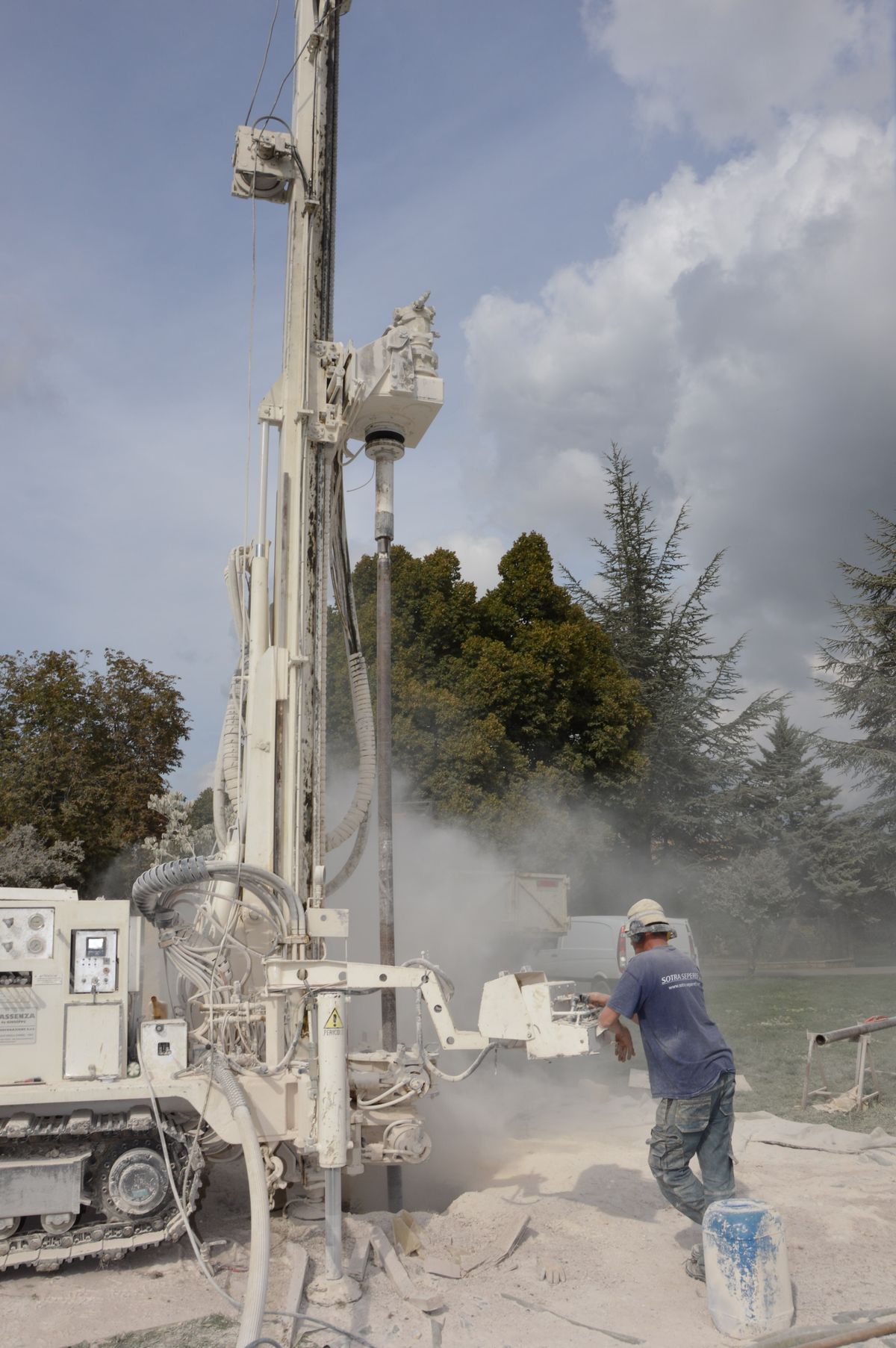
A borehole extracts groundwater from aquifers beneath the property — water that has filtered through rock formations and accumulated in fractures over long time periods. A properly installed borehole system delivers this water to the surface via a submersible pump and distributes it through the property's pipework.
The key attributes of a borehole water supply are:
- On-property supply. The water source is physically on your land — no dependence on municipal distribution infrastructure.
- Independent of the grid when paired with solar or battery backup for the pump.
- Consistent availability during water restriction periods — borehole water is not subject to municipal restriction orders.
- Owner-controlled. You manage the pump, the storage, and the distribution.
Side-by-Side Comparison
| Factor | Borehole | Municipal Supply |
|---|---|---|
| Supply during restrictions | ✔ Unaffected by municipal restrictions | ✘ Subject to restriction orders |
| Supply during load shedding | ✔ Independent (solar/battery backup) | ✘ May fail during extended outages |
| Infrastructure dependence | ✔ Self-contained on property | ✘ Dependent on distribution network |
| Owner control | ✔ Full control of pump, storage, pressure | ✘ No control over supply or pressure |
| Upfront infrastructure | ✘ Requires drilling and pump installation | ✔ Existing infrastructure, connection fee |
| Ongoing maintenance | ✘ Owner responsible for pump and system | ✔ Municipality responsible for network |
| Tariff exposure | ✔ No ongoing municipal water tariff | ✘ Rising tariffs, escalation above inflation |
| Supply volume | Site-dependent — varies by aquifer | Generally consistent (where supply is stable) |
Who Benefits Most from a Borehole?
A borehole is not the right solution for every property or every situation. It provides the most significant benefit for:
- Agricultural and farm properties — where water demand is high, municipal supply is unavailable or unreliable, and irrigation is critical to productivity
- Residential properties experiencing frequent restrictions, supply interruptions, or load-shedding-related pressure loss
- Commercial and industrial operations where water supply continuity is critical and municipal dependency creates operational risk
- Properties in peri-urban or rural areas where municipal infrastructure is limited or non-existent
- Estates and sectional title developments seeking water supply independence for common area irrigation and supplementary supply
Using Both Together
Many property owners do not replace municipal water entirely — they use a borehole as a supplementary or parallel supply. Common configurations include:
- Borehole water for garden irrigation and outdoor use; municipal water for indoor consumption
- Borehole water feeding an overhead storage tank, which provides gravity-fed backup when municipal pressure drops
- Borehole as primary supply with municipal as emergency fallback
A full turnkey borehole installation from Everest Drilling — survey, drilling, pump, and overhead tank — can be designed to integrate with your existing municipal supply in any of these configurations. The pump control panel includes dry-run protection and can be set to switch between sources automatically.
Making the Decision
The decision to install a borehole depends on your property's groundwater potential, your water demand, and your risk tolerance for municipal supply. A geophysical survey determines whether viable groundwater exists on your property before any commitment to drilling is made.
Everest Drilling provides free site assessments to help property owners understand their options. There is no obligation, and the assessment gives you the information needed to make an informed decision about whether a borehole makes sense for your specific property.
Related Articles
Common Questions
Find Out If Your Property Has Groundwater
A geophysical survey tells you what's below before you commit to anything. Free site assessments available across South Africa.