Makhanda — officially renamed from Grahamstown in 2018 — is an Eastern Cape inland town situated in the Makana Local Municipality, which falls within the Sarah Baartman District Municipality. At roughly 500mm mean annual rainfall, the area sits in the semi-arid Eastern Cape interior, where rainfall is seasonal and can be unreliable. The town is widely known as South Africa's university town, home to Rhodes University, and hosts an extensive network of historic residential and institutional properties, student accommodation, guest houses, and small businesses.
Beyond the town boundary, the Makana LM encompasses substantial agricultural land — wheat farms, livestock properties, smallholdings, and game farms and nature reserves that extend into the Eastern Cape interior. These rural properties span the valleys and ridges between Makhanda and nearby towns such as Alicedale, Riebeeck East, and Salem, and reach in the direction of the coastal lowlands towards Kenton-on-Sea.
For both urban properties within Makhanda and rural properties across the Makana area, private borehole water has become an important supplement — or in many cases the primary source — when municipal infrastructure is insufficient or unreliable. Everest Drilling delivers complete turnkey borehole solutions throughout this region, from the initial geophysical survey through to pump commissioning and overhead tank installation.
Discuss Your Project
Call or WhatsApp Everest Drilling for a project-specific quotation for your Makhanda borehole.
+27 (0) 75 112 3456 →The Makhanda area sits predominantly on folded rocks of the Cape Supergroup — specifically the quartzites and shales of the Table Mountain Group and the Bokkeveld Group. These are ancient sedimentary formations that were subjected to intense tectonic folding during the Cape Fold Belt orogeny, producing a series of ridges, valleys, and structural complexity that characterises the Eastern Cape interior landscape.
In these hard, dense quartzite and sandstone formations, groundwater is not held in pore spaces the way it might be in a softer, more porous aquifer. Instead, water accumulates in and moves along fractures, joints, and fault zones in the rock. Finding a productive borehole in Cape Supergroup geology therefore depends critically on locating structural fracture zones — the most water-bearing intersections of folding and faulting in the subsurface. Drilling blind in this geology is a significant risk, as two boreholes close together can yield very different results depending on whether one intercepts a fracture zone and the other does not.
In addition to the Cape Supergroup formations, the Makhanda area is affected by dolerite intrusions from the Karoo magmatic episode — sill and dyke intrusions that cut across the older sedimentary rocks. These dolerite features add further complexity to the subsurface: dolerite dykes can act as barriers to groundwater flow in some configurations, or as pathways in others, and their distribution is not always obvious at surface level.
Why a Geophysical Survey is Essential in Makhanda
Electromagnetic geophysical surveys detect variations in subsurface resistivity that correspond to fracture zones, water-bearing structures, and geological contacts. In the folded Cape Supergroup rocks of the Makhanda area, this kind of survey is the most reliable tool for identifying the optimal drill point before any equipment is mobilised. It provides a site-specific depth estimate and significantly improves the probability of a productive result. Where the geology transitions towards Karoo sedimentary sequences at the margins of the Makana municipal area, survey methodology is equally important for navigating the different groundwater conditions in those formations.
Everest Drilling's approach is survey-first on every project in this geological environment. We do not advocate drilling without a prior geophysical investigation on sites in the Makhanda area, and we communicate clearly with clients about what the survey results indicate and why the recommended drill point has been selected.
Complete end-to-end water solutions for Makhanda homes, farms, game properties and smallholdings — from geophysical survey through to pump commissioning and overhead tank installation.
Electromagnetic survey to map subsurface fracture zones and geological contacts before drilling — essential in the Cape Supergroup quartzites and shales typical of the Makhanda area. The survey guides drill point selection and provides a site-specific depth estimate.
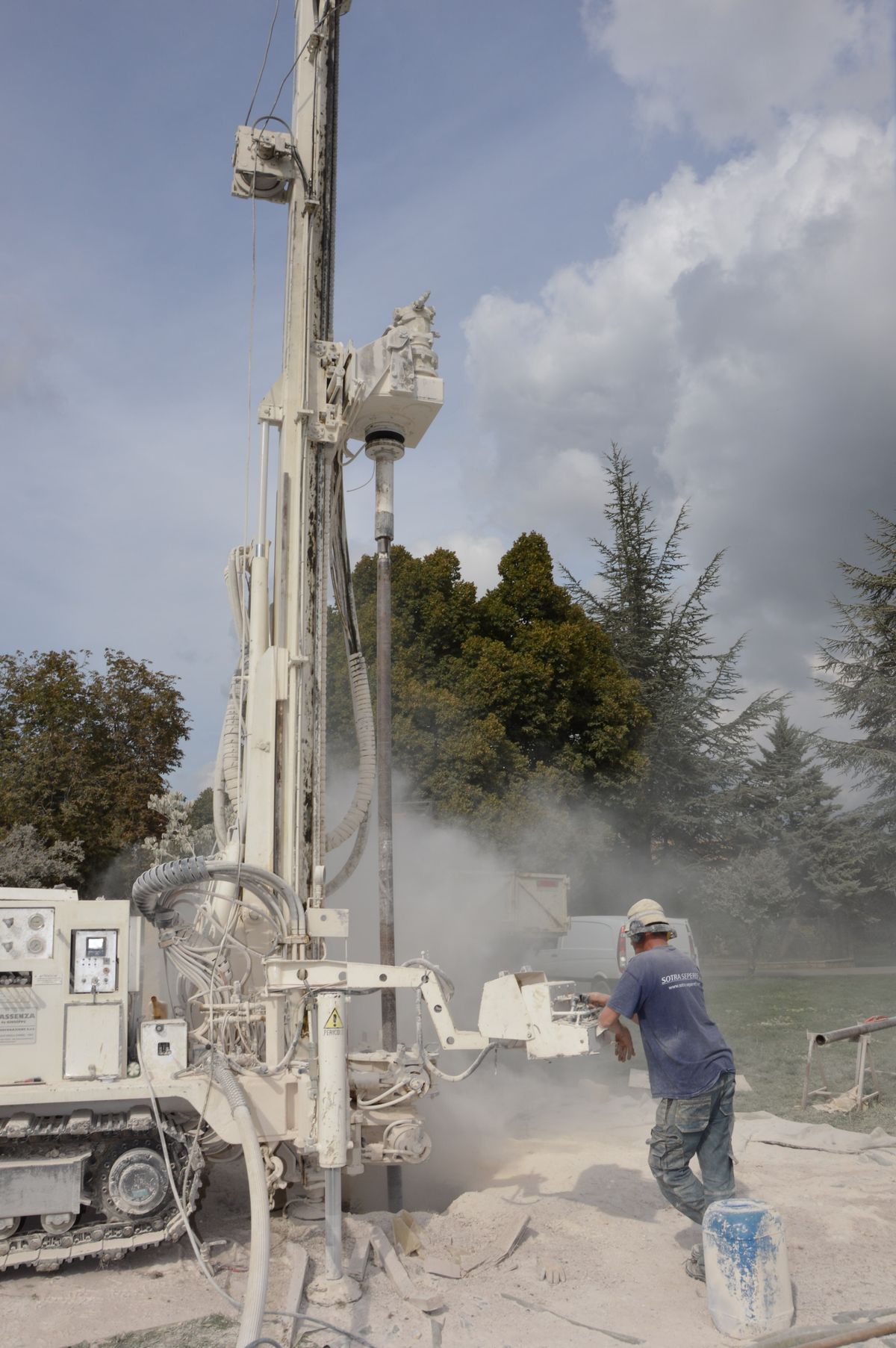
Professional borehole drilling to 250m using industrial-grade rotary and percussion equipment. Depth is site-specific and determined by geophysical survey findings and on-site conditions during drilling. Everest Drilling guarantees the depth of the borehole as quoted and drilled.
Supply and installation of submersible pump sets sized to the yield and head requirements of your Makhanda borehole. Includes pipework, surface connection, and commissioning — handed over ready for use.
Solar-powered submersible pumps for load-shedding-proof water supply — particularly valuable for rural smallholdings, game farms, and nature reserves around Makhanda where grid power is unreliable or unavailable at remote pump points.
Elevated storage tank structures providing gravity-fed water delivery throughout the property. Tanks store water pumped from the borehole and maintain consistent pressure to taps, troughs, and irrigation points without the pump running continuously.
Survey → drill → pump → tank → commission. Everest Drilling manages the entire project under one contractor, reducing co-ordination overhead for Makhanda property owners and ensuring all components are correctly specified and integrated.
Everest Drilling's methodology starts with a geophysical survey — not drilling. In the fractured Cape Supergroup geology of the Makhanda area, a survey-first approach is the single most effective step to improve the probability of a productive borehole outcome. The survey identifies fracture zones and structural features in the subsurface, giving both Everest and the client confidence in the selected drill point and depth before any rig is mobilised.
Everest Drilling guarantees the depth of the borehole as quoted and drilled. This is our commitment on every project — you will receive what you are quoted.
Contact Everest Drilling directly for a project-specific quotation. Borehole costs depend on site conditions, geology, depth, pump selection, and tank requirements — each project is individually assessed.
The Makhanda area has a diverse mix of water users — from inner-town residential properties dealing with municipal supply constraints, to game farms and nature reserves that depend on groundwater as their primary source. Everest Drilling serves them all.
Makhanda has a long and well-documented history of municipal water supply challenges. Residents across the town — from older established neighbourhoods to newer developments — have increasingly turned to private boreholes to supplement or replace municipal water during outages, supply interruptions, and infrastructure failures. A borehole with an overhead storage tank provides a property with water independence regardless of municipal delivery. Urban boreholes in Makhanda are typically shallower than farm projects but still require a geophysical survey to locate productive fractures in the underlying Cape Supergroup rock.
Smallholdings and agricultural properties on the outskirts of Makhanda and throughout the Makana LM require reliable water for livestock, domestic use, worker facilities, gardens, and light irrigation. These properties are typically beyond the reach of reliable municipal infrastructure, making a private borehole the logical primary water source. Everest Drilling designs pump and tank systems appropriate to the water demand profile of each agricultural property — ensuring delivery to all required points across the holding.
The Eastern Cape interior surrounding Makhanda supports a significant number of game farms and privately managed nature reserves. These properties often span large areas with multiple water requirements — game water points spread across the property, lodge facilities, staff accommodation, and vegetation management. Borehole water is typically the only viable primary source for these properties. Solar-powered submersible pumps are particularly well suited to remote game water points, eliminating the need to extend grid power to each pump location.
Makhanda's character as a university town and heritage destination means a significant proportion of the built environment is occupied by student accommodation blocks, guest houses, conference facilities, and institutional properties associated with Rhodes University and the wider cultural and tourism sector. Many of these properties have large water demands relative to a standard residential house and have been affected by Makhanda's municipal water reliability issues. A borehole and overhead tank system provides an important backup or supplementary supply that keeps operations running during municipal interruptions.
Ready to Drill in Makhanda?
Contact Everest Drilling for a project-specific quotation for your Makhanda or Makana LM property. We serve residential properties, smallholdings, game farms, and nature reserves across the Sarah Baartman District.
Also Serving the Eastern Cape