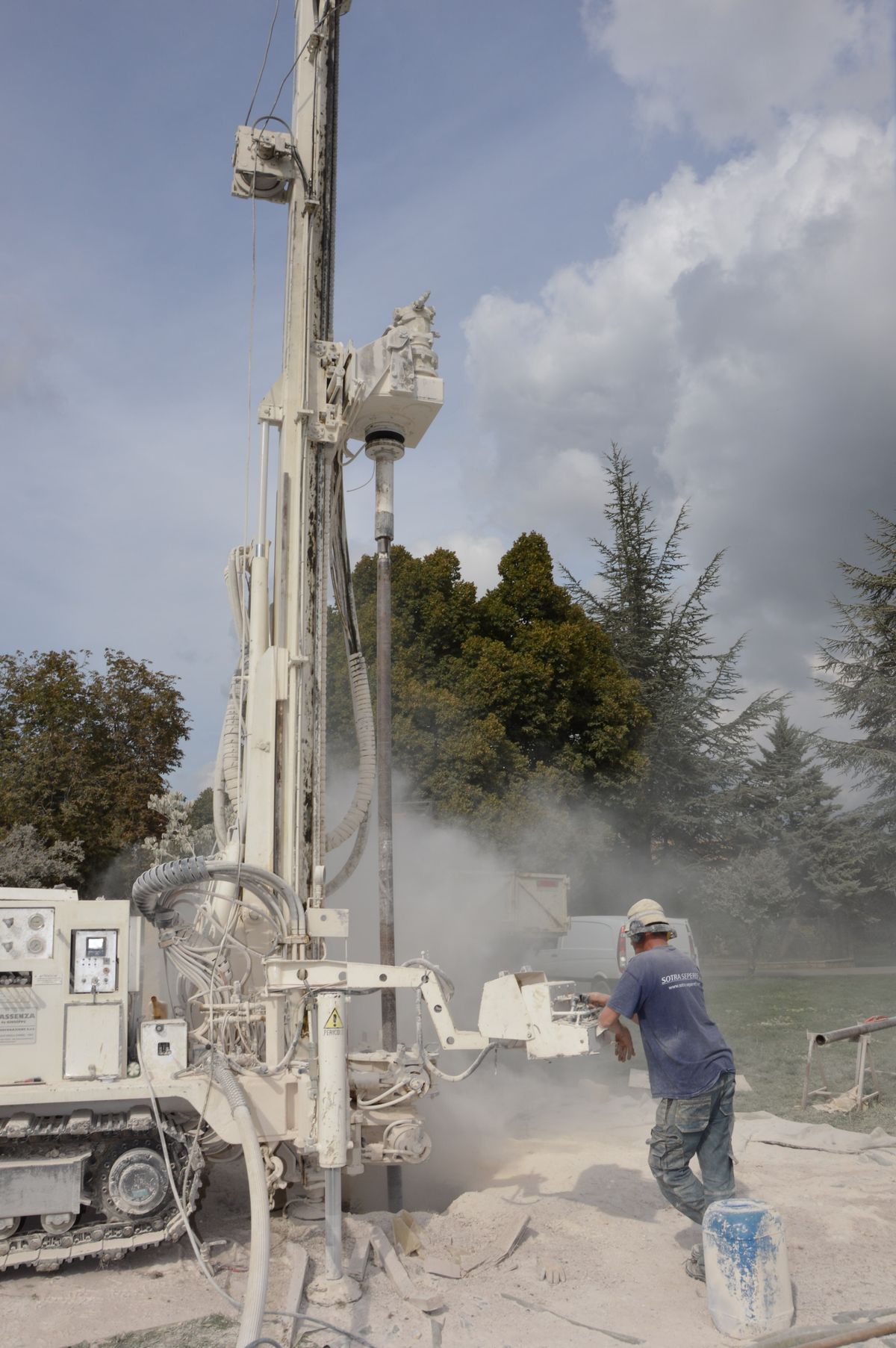
Survey-first borehole drilling in King William's Town (eKhaya) and the Buffalo City Metropolitan Municipality. Geophysical survey, drilling to 250m, solar pump systems, and overhead tank installation — complete turnkey service for residential, commercial, and agricultural properties.
King William's Town — known locally as eKhaya and historically as KWT — is an inland Eastern Cape town situated approximately 50 kilometres from East London along the Buffalo River. Together with East London and Bhisho, it forms part of the Buffalo City Metropolitan Municipality, the only metro in the Eastern Cape.
Like much of South Africa's inland Eastern Cape, King William's Town experiences periods of municipal supply pressure driven by ageing infrastructure, population growth, and the service demands of a mixed residential, commercial, and light industrial town. A private borehole provides an on-property water source that is independent of the municipal network — supplying water for household use, business operations, irrigation, and fire-fighting reserves regardless of what happens to municipal supply at any given time.
The broader Buffalo City Metro — which includes East London, Mdantsane, Zwelitsha, and the surrounding peri-urban belt — has a substantial base of property owners who supplement or replace municipal supply with borehole water. King William's Town, with its mix of established suburbs, peri-urban settlements, light industrial estates, and surrounding farmland, presents a similar profile of groundwater demand.
Everest Drilling services King William's Town and the wider Buffalo City Metro area. Our work in and around KWT covers the full borehole lifecycle: a geophysical survey to identify the optimal drill target on the site, rotary or percussion drilling to the required depth (up to 250m), casing and development, pump selection and installation, and connection of the supply to an overhead storage tank. The result is a self-contained water supply system that the property owner controls.
The town's position on the Buffalo River, its geological profile, and the surrounding agricultural hinterland all influence where and how deep a borehole needs to go — which is why every project begins with a survey rather than a guess.
A private borehole supplements or replaces municipal water, giving residential and commercial properties in KWT an independent on-site supply that is not subject to municipal outages, pressure fluctuations, or restrictions. Many Buffalo City Metro properties use borehole water for garden irrigation, toilet flushing, and non-potable household uses, freeing up municipal allocation for drinking water.
Frequent load-shedding affects electric pump operation, but a solar borehole pump system sidesteps the Eskom grid entirely. Solar panels power the pump during daylight, filling an overhead tank that then gravity-feeds the property around the clock. No generator, no running costs beyond routine maintenance — water available regardless of the load-shedding schedule.
King William's Town is surrounded by agricultural land in the Eastern Cape hinterland — livestock farms, smallholdings, and mixed-use agricultural properties. Water demand on these properties often exceeds what a single municipal connection can supply, and in many cases municipal reticulation does not extend to the farm boundary. A borehole is the primary water source for operations of this kind.
King William's Town sits within the Eastern Cape coastal hinterland, where the dominant geology is Karoo Supergroup sedimentary sequences. These sequences — formed over tens of millions of years during the Permian and Triassic periods — consist primarily of Beaufort Group mudstones and sandstones. They form the bedrock for much of the midland and hinterland Eastern Cape.
Into this sedimentary package, during the Jurassic period, vast quantities of dolerite magma were intruded as horizontal sheets (sills) and vertical bodies (dykes). These dolerite intrusions are one of the defining features of South African geology, and they are critically important for groundwater in the region.
The contact zones between dolerite and the surrounding Karoo sediments are where the most productive groundwater fractures typically develop. As dolerite cools and contracts, it fractures, and these fractures can transmit and store significant volumes of water. Similarly, the margins of dolerite sills and dykes — where the hot intrusion contacted cooler sediments — are often zones of thermal alteration and fracturing that can yield water at depth.
In the KWT area, the primary groundwater targets are fracture zones associated with dolerite sills and dykes cutting through the Karoo sedimentary sequence. The Buffalo River corridor introduces an additional geological element: alluvial deposits — sandy and gravelly sediments laid down by the river over geological time — that can yield shallow groundwater at certain sites near the river and its tributaries.
Borehole depth in this geology is site-specific. The precise location and depth of productive fractures varies from property to property depending on how dolerite intrusions intersect the site, the structural geology of the immediate area, and topographic factors that influence groundwater flow. There is no reliable rule-of-thumb depth for the King William's Town area — different sites in the same suburb may require very different drill programmes.
Everest Drilling carries out a geophysical resistivity survey on every site before drilling begins. The survey measures how the ground responds to an electrical current at different depths, identifying zones of fractured and water-bearing rock beneath the surface. This allows the drill target to be selected on the basis of evidence rather than proximity to a neighbour's existing borehole or proximity to a watercourse. The survey significantly reduces the risk of drilling into an unproductive zone and wasting both drilling budget and time.
Everest Drilling provides the complete borehole service in King William's Town and the Buffalo City Metro — from initial site survey through to running water at the tap. Each component of the project is handled by our own team, with a single point of accountability throughout.
| Geophysical Survey | Resistivity survey to locate water-bearing fractures and identify the optimal drill position and target depth on your specific site. Geophysical survey is required before any drilling — depth is site-specific. |
| Drilling Depth | Site-specific (geophysical survey required). Everest Drilling's equipment is rated to 250m. Everest Drilling guarantees the depth of the borehole as quoted and drilled. |
| Casing & Development | PVC or steel casing installed to protect the borehole integrity, followed by airlift development to clear fines and assess the yield of the completed borehole. |
| Pump Systems | Submersible borehole pumps sized to site yield and daily demand. Grid-connected or solar-powered configurations available. Solar systems include panels, charge controller, and pump. |
| Overhead Tank | Elevated storage tank installation — the tank fills during pump operation and gravity-feeds the property continuously, including during power outages and load-shedding. |
| Reticulation | Pipework from the borehole to the tank, and from the tank to the property's distribution points. Municipal bypass or changeover valve available. |
| Quotation | Contact for a project-specific quotation. Pricing depends on survey results, required depth, pump configuration, tank size, and reticulation scope. |
In the Karoo sediment and dolerite geology around King William's Town, a borehole drilled without a prior geophysical survey is essentially a lottery. Dolerite fractures are not uniformly distributed — they occur in specific structural positions that vary across a property. The survey takes the guesswork out of the process, and is the single most important step in producing a productive borehole.
Solar borehole pumps are particularly well suited to the King William's Town context. The Eastern Cape receives strong solar irradiance, meaning solar panels generate useful power for most of the year. For properties affected by load-shedding — which in KWT can run to multiple hours per day — a solar pump system eliminates the dependency on Eskom entirely. The pump runs during sunlight hours, filling the elevated tank, which then supplies the property by gravity without any electricity required.
The overhead tank is sized to the property's daily water requirement and the borehole's expected yield. For a typical residential property in King William's Town, a tank that holds one to two days' supply provides a comfortable buffer. Larger commercial or agricultural properties may require significantly larger storage volumes — Everest Drilling assesses each project individually and recommends the appropriate tank configuration.
When Everest Drilling quotes a borehole project, the quoted depth is the depth we drill to. There are no mid-project revisions to the depth specification after drilling starts. Our guarantee covers the depth as agreed and documented in the project quotation — giving King William's Town property owners certainty on a critical project parameter before a single metre is drilled.
Because the Karoo sediment and dolerite geology around King William's Town varies considerably from site to site, no generic depth recommendation is possible. The required depth — and the optimal drill location on your property — is determined through geophysical survey. Everest Drilling conducts this survey before any drilling commences, ensuring that the drill programme is based on actual site data rather than assumption.
King William's Town's mix of established residential suburbs, commercial precincts, light industrial land, institutions, and surrounding agricultural properties creates a broad and varied demand for private borehole water.
Homeowners in KWT suburbs and peri-urban areas use borehole water to supplement municipal supply for garden irrigation, toilet flushing, car washing, and general household needs. In areas where the municipal supply is intermittent or pressure is low, a borehole connected to an overhead tank provides reliable on-tap water at all times. Solar pump systems are particularly popular for residential properties because they eliminate both electricity costs and load-shedding disruptions.
Commercial properties, light industrial facilities, and mixed-use business premises in King William's Town require water for operational, ablution, and fire-protection purposes. Municipal supply disruptions can halt operations or create compliance issues. A borehole provides a dedicated backup or primary supply that is controlled by the property owner rather than dependent on the municipal network. Contact Everest Drilling for a project-specific quotation for commercial volumes and configurations.
Schools, churches, clinics, and other institutional properties in the King William's Town area have significant daily water needs that must be met reliably. A borehole with adequate storage provides water for ablutions, kitchen use, garden maintenance, and fire suppression infrastructure. Overhead tank gravity-feed systems are well suited to institutional settings because they require no electricity for distribution — water flows at all times regardless of the power situation.
The agricultural land surrounding King William's Town — livestock farms, smallholdings, crop operations, and game properties — depends on private water sources. Municipal reticulation typically does not extend across agricultural land, making boreholes the primary water supply for these properties. Everest Drilling has extensive experience with multi-borehole farm water systems in the Eastern Cape hinterland, including high-volume pump systems for irrigation and stock watering across large acreages.
New residential and commercial developments in and around King William's Town can benefit from a borehole installed during the construction phase. Early installation allows borehole water to be used for construction (dust suppression, concrete mixing, worker ablutions) before being integrated into the completed building's water supply system. This avoids the additional disruption of post-construction drilling.
Everest Drilling's service area extends from King William's Town to cover East London (50km), Bhisho, Zwelitsha, Stutterheim, Cathcart, and the surrounding rural areas. Properties in the broader Buffalo City Metro and adjacent districts can contact Everest Drilling for a site assessment and project-specific quotation. Distance within the Eastern Cape region is not a barrier to service.
Contact Everest Drilling for a project-specific quotation. We begin every project with a geophysical survey — no guessing, no generic estimates. Serving King William's Town, Zwelitsha, Bhisho, East London, and the wider Buffalo City Metro.