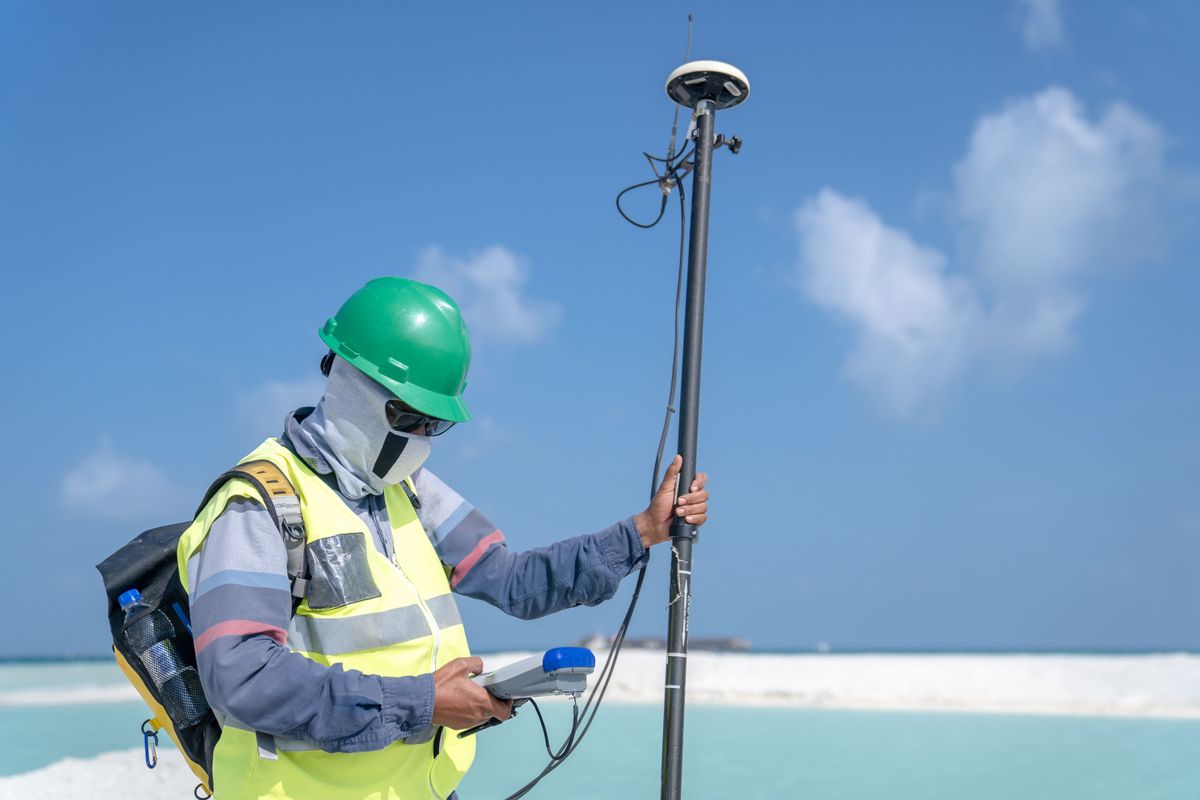
A geophysical survey is the essential first step before any borehole is drilled. It maps what lies below the surface without any drilling — giving you and the drilling team the information needed to select the right location and estimate the target depth before a rig is mobilised to your property.
What Is Electromagnetic Geophysical Surveying?
Electromagnetic (EM) surveying measures how the ground responds to electromagnetic signals transmitted from surface equipment. Different rock types, fracture zones, faults, and water-bearing features produce different responses. By measuring these variations along survey lines across a property, the survey team can build a picture of the subsurface geology without disturbing the ground.
In South African geology — particularly in Karoo-type formations and hard-rock environments — groundwater does not distribute evenly through the rock. It concentrates in fractures, joints, faults, and contact zones between different rock types. The survey identifies where these features are most pronounced and recommends the most promising drill point.
What the Survey Involves
Site Assessment & Line Planning
The survey team assesses the property, reviews available geological information for the area, and plans the survey lines to cover the most relevant ground for potential drill points.
EM Scanning
The electromagnetic equipment is carried or transported along the survey lines. Readings are taken at regular intervals, logging subsurface response data. No digging, drilling, or ground disturbance is involved.
Data Interpretation
The field data is processed and interpreted by the survey team. Anomalies that indicate fracture zones, faults, or other groundwater-associated features are identified and mapped.
Survey Report & Drill Point Recommendation
The output is a site map showing the recommended drill point — the location on your property where the subsurface conditions are most favourable for a productive borehole — along with an estimated target depth.
What the Survey Output Tells You
The survey report gives you:
- The recommended drill point — the GPS-located position on your property with the best subsurface indicators
- Estimated target depth — the depth at which a productive fracture zone is anticipated, forming the basis of the drilling quotation
- Geological context — an interpretation of the subsurface features identified, so you understand what the survey found and why the recommendation was made
- Alternative points — where the survey identifies more than one potentially productive zone, alternatives are noted
Why this matters in South African geology: In Karoo sedimentary and dolerite terrain, drilling in the wrong location — even a short distance from the optimal point — can mean reaching depth with little or no productive water yield. The geophysical survey makes the difference between an informed drill decision and a costly guess.
Who Needs a Geophysical Survey?
Everest Drilling recommends a geophysical survey before every borehole project — residential, farm, commercial, or industrial. The survey is particularly important for:
- Properties in Karoo geology where fracture zones are localised and variable
- Sites where previous boreholes on the property have underperformed
- Large properties where there are multiple potential drill locations and the best one needs to be identified
- Commercial and agricultural projects where water demand is high and a dry result would be costly
- Any project where the client wants to understand what they are drilling into before committing to the full drilling programme
Frequently Asked Questions
What does a geophysical survey for a borehole involve?
A geophysical survey for a borehole uses electromagnetic (EM) scanning equipment to map subsurface geology without any drilling. The equipment is moved along survey lines across the property, measuring how the ground responds to electromagnetic signals. Variations in the response indicate fracture zones, faults, and changes in rock type. The result is a site map showing the recommended drill point and an estimated target depth.
How long does a geophysical survey take?
A standard geophysical survey on a residential or small farm property typically takes a few hours on site. The survey team walks or transports the EM equipment along the survey lines, logs the data, and produces an interpretation report. The time depends on the size of the property and the complexity of the terrain.
Why is a geophysical survey needed before drilling a borehole?
Groundwater in fractured rock geology does not distribute evenly — it concentrates in specific fracture zones and structural features. Drilling without a survey means selecting a drill point based on guesswork, and the risk of reaching depth with insufficient water yield is significantly higher. A survey directs the drill to the most promising location on the property, reducing the risk of a dry or underperforming result.