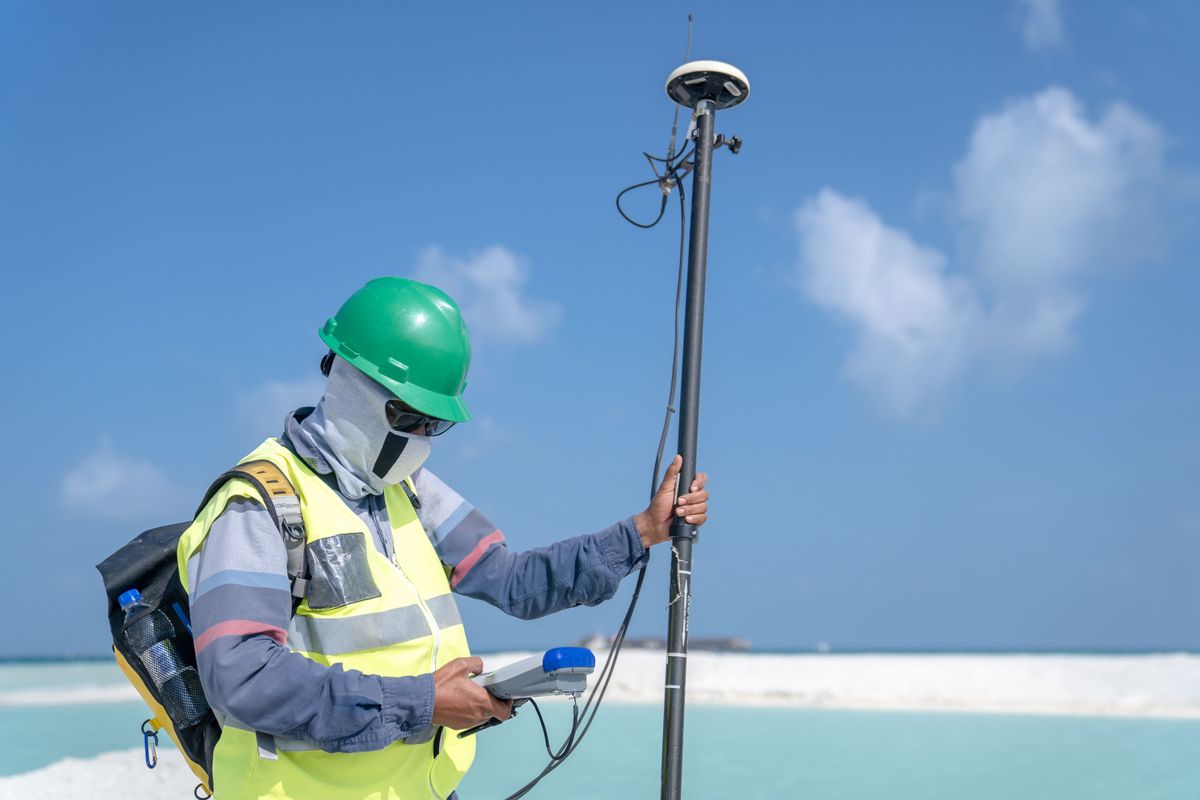
The single most avoidable risk in any borehole drilling project is drilling in the wrong location. Groundwater in South Africa does not distribute evenly beneath the soil. It concentrates along fractures, fault lines, and geological contacts — and these features are invisible from the surface. Selecting a drill point by eye, habit, or guesswork produces unpredictable results. A geophysical survey removes that guesswork entirely.
What a Geophysical Survey Actually Does
A geophysical survey uses electromagnetic (EM) induction and electrical resistivity equipment to scan the subsurface without digging. The equipment transmits a controlled electromagnetic signal into the ground and measures how the signal responds as it passes through different geological layers. Rock that is dry, dense, or unfractured responds differently to the signal than rock that contains water-bearing fractures.
The result is a subsurface map identifying where fractured zones, aquifer targets, and geological structures lie beneath your specific property. This information directly informs where the drill point should be placed for the best probability of intersecting productive groundwater.
What the survey identifies:
- Location and approximate depth of water-bearing fractures
- Geological contacts where water tends to accumulate
- Areas of high resistivity (dry, dense rock — to avoid)
- Areas of low resistivity (fractured, water-saturated zones — to target)
- Structural anomalies such as dykes that can act as barriers to groundwater
The Risk of Drilling Without a Survey
South Africa's geology is highly variable. A drill point selected without subsurface data may penetrate dense, unfractured basement rock where water-bearing zones are absent or too deep to be productive. This outcome is not the result of poor drilling — it is the result of a poor drill-point decision made without adequate information.
A dry or low-yielding borehole still incurs the full cost of mobilisation, drilling, and casing. The project investment is spent with no productive result. A geophysical survey substantially reduces the probability of this outcome by replacing guesswork with data.
Key point: A geophysical survey does not guarantee a productive borehole — no survey can guarantee what nature has placed underground. What it does is give the driller the best available information to place the drill point where the probability of success is highest on your property.
How the Survey Relates to Drill Point Selection
Once the survey is completed, the data is interpreted to identify the anomalies most likely to represent productive fracture zones. The drill point is then recommended at the location on the property that offers the best geological target based on the survey results.
This process also helps avoid unsuitable locations — areas of the property that the surface appearance might suggest are equally valid, but that subsurface data shows are underlain by dry, unfractured rock. Without a survey, these locations cannot be distinguished from each other.
Survey Equipment and Methodology
Everest Drilling uses electromagnetic induction and electrical resistivity scanning equipment for geophysical surveys. These methods are well-established in South African hydrogeological practice and are suited to the fractured-rock aquifer environments that dominate large parts of the country's geology.
The survey is conducted on foot across your property. Survey lines are walked systematically, with data recorded at regular intervals. The full survey typically covers the accessible area of the property and takes a few hours to complete depending on site size and terrain.
When a Survey Is Most Important
A geophysical survey is recommended before all borehole drilling projects. It is particularly important in areas where:
- The geology is known to be hard, fractured basement rock
- Neighbouring boreholes have had variable results
- The property is large and multiple possible drill locations exist
- Previous boreholes on the same property have been unproductive
- The water requirement is substantial, making drill-point precision more critical
Everest Drilling's approach: Everest recommends a geophysical survey as the first step in every borehole project. The survey data informs drill-point selection and forms part of the overall project assessment. Contact us to discuss survey requirements for your property.
Summary
A geophysical survey maps what is underground before drilling begins. It identifies water-bearing fractures, avoids unproductive zones, and gives the project the best available information for drill-point selection. Skipping the survey removes the most effective risk-reduction step available in borehole drilling and increases the probability of an unproductive outcome. For any property where reliable groundwater access matters, a geophysical survey is the right place to start.