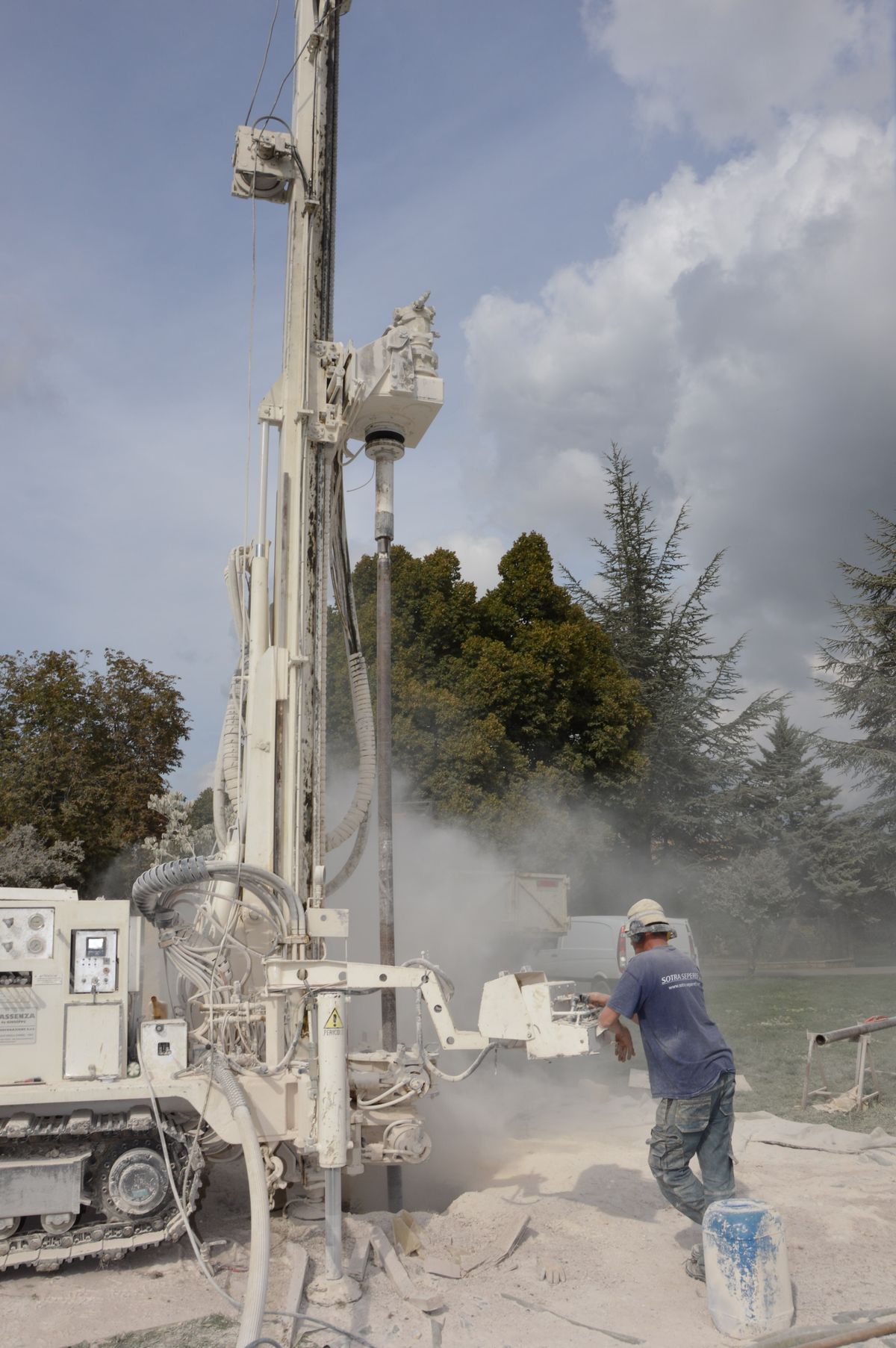
Commercial and industrial water supply in South Africa operates under a different set of pressures to residential supply. Volume requirements are larger, operational continuity matters more, and the consequences of supply failure are measured in business disruption rather than household inconvenience. Municipal water supply — even where it is available — increasingly fails to meet the reliability and volume demands of commercial and industrial operations. A dedicated borehole water supply system offers an alternative that commercial property owners and operators control independently.
Who Uses Commercial Borehole Water Supply
Borehole water systems for commercial and industrial applications serve a broad range of property types and operations:
Common commercial and industrial borehole applications:
- Office parks and business estates: Landscaping, ablution facilities, fire suppression, and HVAC cooling tower make-up water
- Manufacturing and processing facilities: Process water, equipment cooling, cleaning, and dust suppression
- Construction sites: On-site water supply for concrete mixing, dust suppression, worker facilities, and equipment washing
- Hospitality and guest facilities: Hotels, lodges, conference centres — high daily volume with low tolerance for supply interruption
- Retail and shopping centres: Irrigation, ablutions, and backup supply during municipal outages
- Schools and institutions: High-volume daily use across ablutions, kitchens, grounds maintenance, and sports facilities
How Commercial Borehole Projects Differ from Residential
Commercial borehole projects differ from residential ones in several important ways:
Volume requirements are higher. A residential borehole may be sized to supplement household use. A commercial or industrial borehole must be designed around the actual operational volume requirement — which may be far larger and more consistent throughout the day.
Pump specifications are different. Higher volume delivery requires larger, more powerful submersible pumps. The pump must be matched to the standing water level, the actual sustainable yield of the borehole, and the volume required per hour or per day for the operation. Over-specifying or under-specifying the pump for a commercial application creates operational and longevity problems.
Multiple boreholes may be required. Where a single borehole cannot deliver the required volume from its aquifer, a multi-borehole system — with boreholes spaced to draw from independent parts of the aquifer — can meet larger demand. This approach requires careful hydrogeological planning to avoid inter-borehole interference.
Storage design matters more. A commercial operation with fluctuating demand — peak use during business hours, reduced use at night — benefits from a well-designed storage system. Large ground-level or elevated tanks allow the borehole pump to operate on a fill-cycle that does not need to track real-time demand, extending pump life and providing a buffer against temporary pump downtime.
Key consideration: The starting point for any commercial borehole project is an accurate assessment of the daily and peak volume requirement, followed by a geophysical survey to identify the best drill location on the property. These two inputs — demand and geology — determine the right drilling approach, pump specification, and storage design.
Why Municipal Supply Is Increasingly Inadequate for Commercial Use
Municipal water supply failures affect commercial operations more severely than residential ones. A manufacturing facility that loses water supply mid-shift faces production stoppage. A hotel with no water supply faces immediate operational failure. A construction site without water cannot proceed with concrete work or dust control.
The same factors affecting residential supply — ageing infrastructure, load shedding, drought restrictions, and tariff increases — apply equally to commercial connections, but the operational consequences of failure are greater. A dedicated borehole water supply system removes the dependency on municipal infrastructure for the volume categories it covers, providing operational continuity regardless of what is happening on the municipal network.
Geology and Commercial Sites
Commercial and industrial zones in South African cities and towns are often located on different geological profiles to surrounding residential areas. Hard-rock basement geology, altered zones near quarrying or mining activity, and areas of deep unconsolidated sediment all present different drilling requirements. Everest Drilling's heavy-duty truck-mounted rig is suited to both hard-rock and softer formation drilling, making it appropriate for commercial sites across South Africa's varied geology.
A geophysical survey before drilling is equally — if not more — important on a commercial site, where the consequences of a dry or low-yielding borehole are amplified by the larger investment and greater operational dependency.
Planning a Commercial Borehole Project
When discussing a commercial borehole project with Everest Drilling, the most useful information to have ready includes:
- The site's daily water consumption requirement across all uses
- Peak hourly demand periods and operational hours
- Whether the borehole is intended as a primary supply, supplementary supply, or emergency backup
- Existing water infrastructure on the site — connections, storage tanks, pump rooms
- Site access constraints for the drilling rig and support vehicles
- Power availability at proposed pump locations
Contact Everest Drilling to discuss your commercial or industrial water supply requirement. We operate heavy-duty drilling equipment across South Africa and can advise on the survey, drilling, pump, and storage approach suited to your operation.
Summary
Commercial and industrial borehole water supply provides operational continuity and independence from municipal infrastructure that cannot reliably meet the volume and reliability demands of many South African businesses. Commercial projects differ from residential ones in volume, pump specification, storage design, and often in the number of boreholes required. Starting with accurate demand assessment and a geophysical survey gives any commercial borehole project its strongest foundation.