Commercial and industrial water demand differs fundamentally from residential demand in scale, consistency, and the cost of supply interruption. A hotel that loses water supply loses bookings. A factory that loses process water loses production. A residential estate that loses supply faces complaints from hundreds of households. A commercial borehole system is designed to meet these demands reliably, with redundancy built into the supply architecture from the outset.
Commercial Demand vs Residential
Residential boreholes are typically designed around a single borehole supplying a single household's daily consumption. Commercial borehole systems must account for:
- Higher total daily volume — commercial and industrial operations consume water at multiples of residential rates
- Peak demand profiles — hotels and restaurants have sharp demand peaks at mealtimes and shift changes; factories may require continuous high-flow supply
- Continuity requirement — supply interruption has direct operational and financial consequences; redundancy through multiple boreholes or adequate tank storage is standard
- Pump system capacity — larger submersible pumps, larger rising mains, and higher-capacity pump control panels are required to meet commercial flow rates
Industries Served
Agriculture
Hospitality
Manufacturing
Property Development
Residential Estates
Game Farms & Lodges
The Commercial Drilling Programme
Demand Assessment
Total daily water demand is established — including peak flow rates, seasonal variation, and any process-specific requirements. This determines the minimum yield target for the borehole programme.
Geophysical Survey
A comprehensive EM geophysical survey covers the commercial site, identifying the most productive drill locations and target depths. For multi-borehole programmes, the survey identifies the optimal spacing and placement of each borehole to avoid interference between boreholes drawing from the same fracture zone.
Drilling & Yield Testing
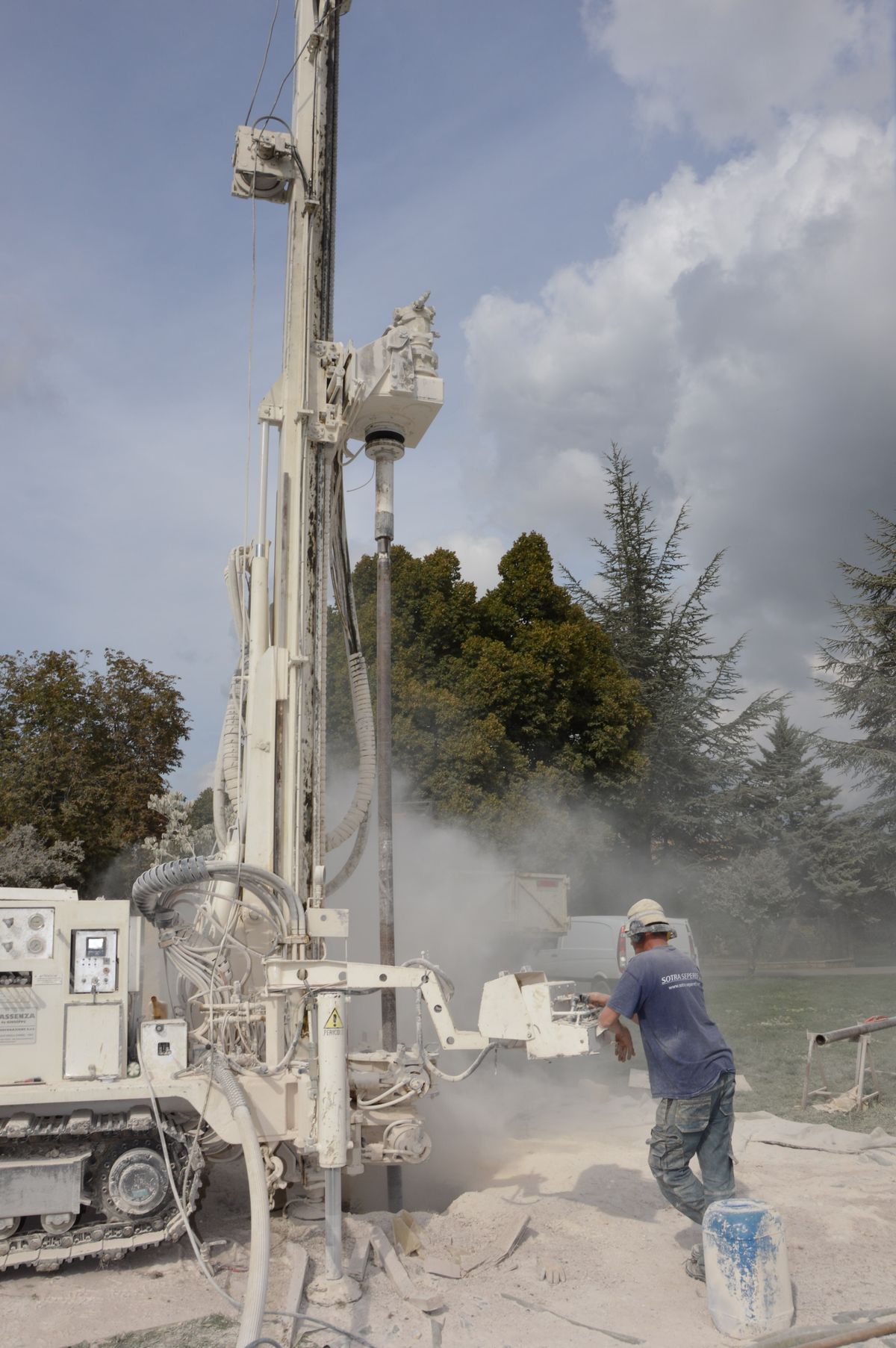
Each borehole is drilled to the target depth established by the survey. Everest Drilling guarantees the depth as quoted. After drilling, a yield test confirms the sustainable output of each borehole. Everest Drilling's drilling capability extends to 250 metres depth.
Pump System & Infrastructure
Commercial pump systems are sized and installed to meet the total demand. For multi-borehole systems, individual pump controllers can be networked and managed from a central control point. Overhead tank farms provide the storage buffer required for high-demand commercial supply.
Multiple borehole systems: For large commercial properties and estate developments, two or more boreholes operating in combination provide both the total yield required and supply redundancy — if one borehole or pump requires maintenance, the other continues to supply. Everest Drilling designs multi-borehole systems to avoid hydraulic interference between boreholes while maximising total site yield.
Pump Selection for Commercial Volumes
Commercial borehole pump systems differ from residential installations in scale and control complexity. Key differences include:
- Higher pump capacity — commercial submersible pumps are selected for higher flow rates, matched to commercial demand profiles rather than household consumption
- Variable speed drives — for operations with variable demand, variable speed pump controllers optimise pump output to match real-time demand, extending pump life and reducing energy use
- Telemetry and remote monitoring — commercial systems can be fitted with monitoring equipment that reports pump status, tank levels, and borehole water levels to a central control point or remotely
- Generator backup integration — commercial systems can be designed to switch to generator power automatically during load shedding, ensuring continuous operation
Overhead Tank Farm for Large Estates
A residential estate or large commercial development typically requires a central elevated storage facility — a tank farm — rather than a single tank. The tank farm stores water from multiple boreholes, provides gravity-fed distribution to the development, and buffers against demand peaks. Everest Drilling designs and constructs tank farm structures as part of a complete commercial water supply installation.
Frequently Asked Questions
How many boreholes does a commercial property need?
The number of boreholes required depends on the total daily water demand and the sustainable yield achievable from each borehole at the site. A single high-yield borehole may be sufficient for a medium-sized commercial property. Larger operations — estate developments, agricultural facilities, industrial plants — may require multiple boreholes operating in combination to meet demand. Everest Drilling assesses the site's water demand and geophysical characteristics to recommend the appropriate number and spacing of boreholes.
What flow rate is required for commercial borehole use?
Commercial flow rate requirements vary considerably by industry and operation size. Office buildings and hospitality properties typically require continuous supply at moderate flow rates. Agricultural operations may require high-volume supply for irrigation over limited daily windows. Industrial processes may require consistent high-flow supply around the clock. The geophysical survey and yield test together determine what the site's aquifer can sustainably deliver, which is then matched to a pump system sized for the commercial demand profile.
Can a borehole supply an entire office park or estate?
Yes — where aquifer conditions support adequate yield, a borehole system can supply an entire office park or residential estate. This typically involves one or more boreholes connected to a central overhead tank farm, with a distribution network supplying the entire development. The key is correctly sizing the borehole programme, pump capacity, and storage volume to match the total demand of the development. Everest Drilling designs and installs complete commercial water supply systems of this type.
See how we completed a similar project for a commercial client →