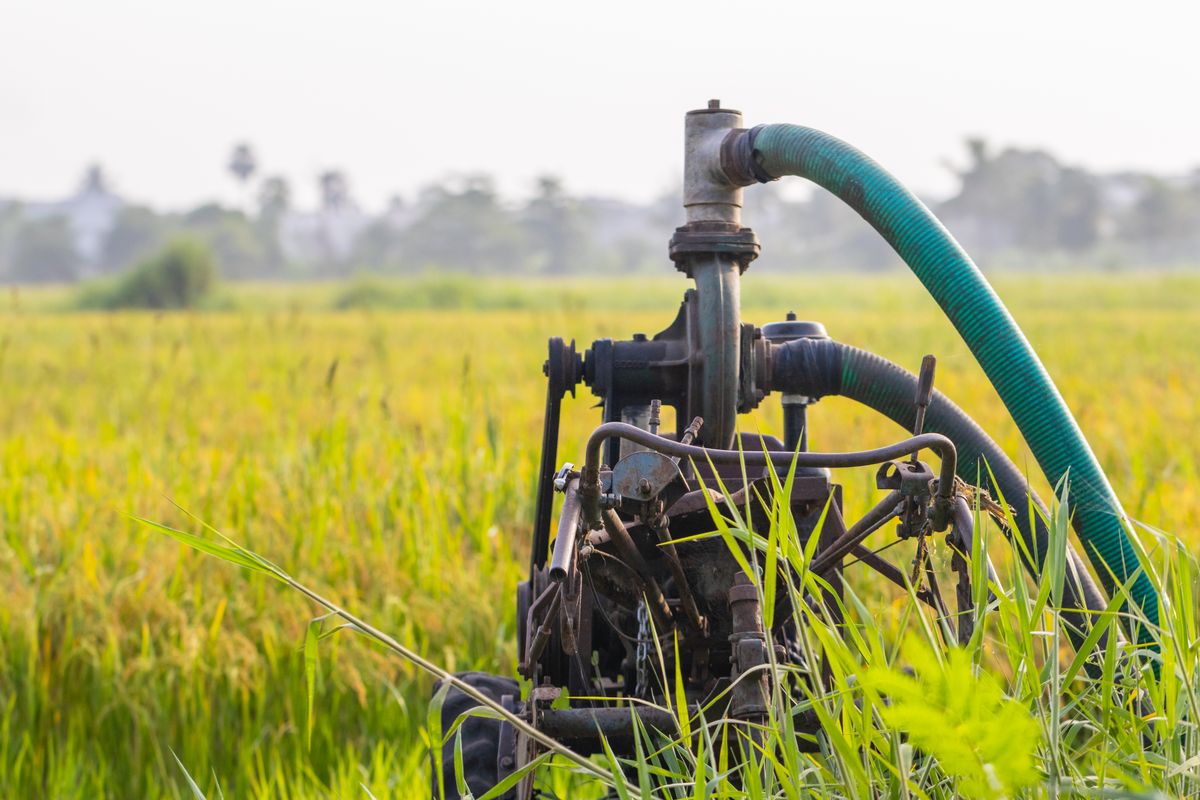
Water is one of the most critical inputs in South African agriculture. Municipal supply cannot always reach farms reliably, and where it does, restrictions, infrastructure failures, and escalating tariffs create uncertainty. A farm borehole provides an on-property, independent water source that the farm controls directly — for irrigation, livestock, worker facilities, and processing operations.
Why Farm Water Supply Faces Increasing Pressure
South Africa is a water-scarce country, and agricultural demand places significant strain on available surface and municipal water resources. Farmers across all provinces face a combination of:
- Municipal water restrictions during droughts and low-dam periods
- Ageing rural water infrastructure with unreliable supply
- Rising agricultural water tariffs
- Eskom load shedding disrupting electrically pumped municipal supply
- Extended dry seasons reducing river and dam availability
A borehole does not depend on municipal infrastructure, dam levels, or grid electricity (when paired with a solar or battery-backed pump). For a working farm, this independence has practical operational value that surface supply sources cannot match during periods of restriction or failure.
Common Agricultural Uses for Borehole Water
Farm boreholes serve a range of operational needs depending on the size and type of farming operation:
Typical agricultural borehole applications:
- Irrigation: Drip, flood, and sprinkler irrigation systems for field crops, orchards, and nurseries
- Livestock watering: Cattle, sheep, goats, poultry, and game — consistent access to water is critical for animal health and production
- Worker facilities: Ablution blocks, kitchen facilities, and accommodation water supply for farm workers and their families
- Processing operations: Washing and cleaning of produce, equipment, and facilities
- Fire suppression: On-property reserve storage for emergency use
Why Geophysical Surveys Are Particularly Important on Agricultural Land
Agricultural properties are often large, and the geology beneath a single farm can vary considerably from one area to another. Fractured aquifer zones — the primary source of groundwater in hard-rock environments — may be concentrated in one part of the farm while other areas produce little or no groundwater.
Drilling without a geophysical survey on agricultural land is a significant risk. A borehole placed in an unproductive zone produces no usable water regardless of depth drilled. A geophysical survey maps the subsurface across the relevant area of the farm, identifies the fracture zones most likely to contain water, and informs where the drill point should be placed for the best probability of a productive outcome.
For larger farms with multiple water points required, the survey also helps prioritise which locations to drill first and which areas are geologically unsuitable.
Important: On large properties with variable geology, a single geophysical survey conducted across multiple survey lines provides far more useful data than a short survey covering only the intended drill point area. Everest recommends surveying the relevant portion of the property rather than just the nominated drill location.
Pump Selection for Agricultural Boreholes
Agricultural applications typically require higher volumes of water than residential boreholes. The pump must be matched to the actual standing water level, working flow rate, and the volume required for the intended application — not selected generically.
For irrigation applications, the volume requirement and the time window available for pumping (whether continuous or scheduled) both influence pump specification. For livestock watering at remote points, the ability to operate independently of grid power is often a primary consideration, making solar-powered submersible pumps a practical option.
Everest Drilling installs and commissions submersible pumps and hand pumps for agricultural applications across a range of flow and depth requirements. The right pump for a specific farm application depends on site-specific data gathered after drilling.
Storage Considerations for Farm Operations
Farm water needs often fluctuate — high demand during irrigation cycles, lower demand outside of growing seasons. An overhead or ground-level storage tank allows the borehole pump to operate on a fill-and-stop cycle, accumulating water when demand is low so that larger volumes are available when irrigation or other peak demand occurs.
For remote livestock points, small tanks or troughs filled by borehole pumps provide a practical solution that reduces the infrastructure required to pipe water across large distances.
What to Discuss with Everest Before a Farm Borehole Project
Before any agricultural borehole project begins, the most useful information to have ready includes:
- The intended primary use — irrigation type, livestock numbers, processing volume
- The area of the farm where water access is needed
- Whether neighbouring farms have boreholes, and if so, the general experience with productivity
- Existing water sources on the property and what gaps the borehole needs to fill
- Power availability at the intended pump location — grid, solar, or off-grid
Contact Everest Drilling to discuss your farm's water supply requirements. We operate across South Africa and can advise on the appropriate survey and drilling approach for your property's geology and application.
Summary
A farm borehole provides an independent, on-property water source that removes dependency on municipal supply and surface water sources that face increasing pressure. Geophysical surveying is particularly important on agricultural land where geology varies across large areas and drill-point selection directly determines project outcomes. The pump system and storage solution must be matched to the specific volume and infrastructure requirements of the farming operation.