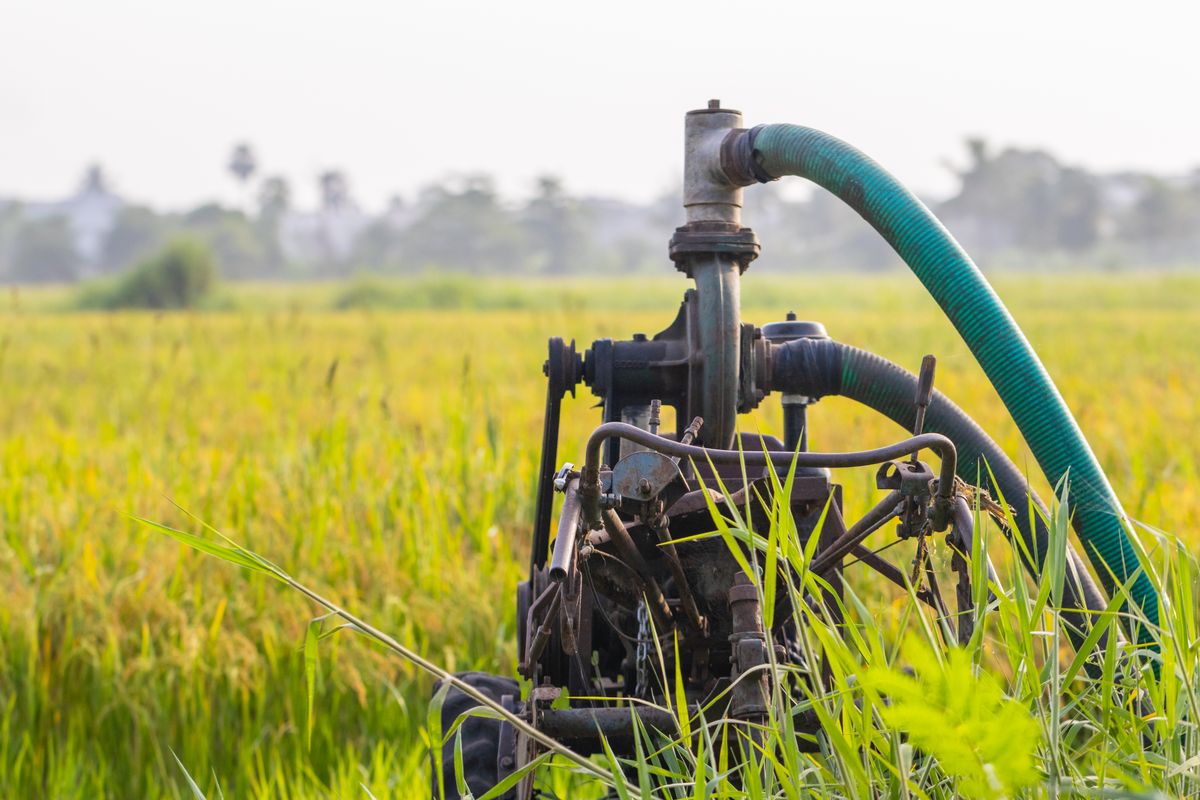
Drilling the borehole and installing the pump are only part of a complete borehole water supply system. Once water is at the surface, it still needs to travel — through pipes, across the property, into tanks, and eventually to every tap, shower, and irrigation zone you intend to supply. That journey is governed by the reticulation system.
Borehole reticulation is the network of pipework, valves, fittings, and pressure management components that connects the borehole to every point of use on your property. A well-designed reticulation system delivers water efficiently, at the right pressure, without cross-contamination between water sources, and with the controls needed to automate the whole process. A poorly designed one creates friction losses, valve failures, backflow risks, and headaches from the first day of operation.
This guide walks through the full reticulation system — from the rising main inside the borehole casing to the last tap on the irrigation line.
What Is Borehole Reticulation?
The term "reticulation" simply means the distribution network — the pipes, joints, valves, and fittings through which water moves from its source to where it is used. In a borehole context, the reticulation system has two main segments:
- The rising main: the pipe inside the borehole casing that carries water up from the submersible pump to the surface. This is always under pressure when the pump is running.
- The surface reticulation: all the pipework from the wellhead at the surface to the storage tank, and then from the storage tank to the property's internal plumbing, garden taps, and irrigation zones.
Between these two segments sit a discharge header — the manifold at the wellhead where the rising main transitions to surface pipework — and a collection of valves and fittings that control flow, protect against backflow, allow isolation for maintenance, and enable the changeover between borehole and municipal water where both supplies exist.
The reticulation design depends on the pump's flow rate, the vertical distance from the pump to the surface, the horizontal distance from the borehole to the storage tank, the number and type of end-use points, and whether you are integrating with an existing municipal supply. There is no single template — every property layout produces a different reticulation design.
From Borehole to Tank: The Rising Main and Discharge Header
Inside the borehole casing, the submersible pump sits near the bottom of the water column. The rising main — a continuous length of pressure-rated pipe — connects the pump's discharge outlet to the surface. It carries water upward against gravity whenever the pump runs, and it must be sized to handle the pump's maximum flow rate without excessive friction loss.
Rising main pipe materials are almost always HDPE (high-density polyethylene) in South Africa, typically rated at PN10 or PN16 for residential boreholes. HDPE is flexible enough to be lowered into the borehole with the pump, resistant to the mineral content of most groundwater, and does not corrode. Common rising main diameters are 32 mm and 40 mm for residential and light commercial installations.
At the surface, the rising main exits the borehole casing through a sealed wellhead fitting. The wellhead is a critical component — it seals the top of the casing against surface water ingress (which can contaminate the aquifer), secures the weight of the pump and rising main, and provides the connection point for the surface pipework.
The discharge header is the short manifold section at the wellhead that transitions the rising main to the surface pipework. A well-constructed discharge header includes:
- A non-return valve (check valve) immediately after the pump outlet — this prevents water from draining back down the rising main when the pump stops, which causes water hammer and pump cycling
- A gate valve or ball valve for isolating the borehole without disconnecting the pipework
- A pressure gauge to monitor pump discharge pressure
- A pressure relief valve on pressurised systems to protect against over-pressure events
- Connection point for the surface line to the storage tank
From the wellhead, the surface line runs to the storage tank — above ground or below. This section is typically uPVC (unplasticised polyvinyl chloride) or HDPE pressure pipe, buried where it crosses driveways or areas subject to ground movement, and clipped to walls or structures where surface-run.
Pipe Material Selection: uPVC, HDPE, and Polypipe
The three most common pipe materials for borehole reticulation in South Africa each have a defined role:
HDPE (High-Density Polyethylene / Polypipe): Used for the rising main inside the borehole casing, and for buried surface lines. HDPE is flexible, impact-resistant, and can be supplied in coils for long runs with fewer joints. It handles pressure well and is not affected by soil movement. For buried pipework under driveways or in areas with expansive clay soils, HDPE is the preferred choice. The main limitation is that HDPE requires butt-fusion or electrofusion joining for high-pressure applications — push-fit and threaded connections are limited to lower-pressure points.
uPVC (Unplasticised PVC): The standard material for above-ground surface reticulation and internal distribution pipework. uPVC is rigid, lightweight, and easy to work with using solvent cement joints. It handles municipal supply pressures comfortably and is widely available in South Africa. The limitation is brittleness in cold conditions and susceptibility to UV degradation over time when exposed to sunlight — external uPVC runs should be painted or sleeved.
Polypipe / PE-RT (Polyethylene Raised Temperature): Used inside buildings for hot and cold water distribution, and increasingly for subsurface irrigation reticulation. It is flexible, lightweight, and compatible with push-fit fittings, making it fast to install for complex layouts.
Rule of thumb: HDPE underground, uPVC above ground and inside buildings. The rising main is always HDPE. Where surface lines are exposed to traffic loads, buried HDPE is far more durable than uPVC — a vehicle driving over buried uPVC that is not sleeved in conduit will eventually crack it.
From Tank to Property: Gravity-Fed vs. Pressure-Boosted Reticulation
Once water is in the overhead storage tank, it needs to reach every point of use in the property. There are two fundamentally different approaches to distributing water from the tank:
Gravity-fed reticulation relies on the height of the tank above the outlets to generate pressure. A tank elevated 10 metres above the lowest tap on the property produces approximately 1 bar of static pressure — enough for basic domestic use, showers, and garden taps. The advantages of gravity-fed systems are their simplicity and independence from power: if the electricity fails, water still flows at natural pressure. The disadvantage is that gravity pressure is relatively low compared to municipal supply, and it drops further as the tank level falls. For properties where the tank can be sited at significant height — on a hill, on a tower structure, or on a high roof — gravity feed is the most reliable long-term solution.
Pressure-boosted reticulation uses a surface booster pump (also called a pressure pump or transfer pump) downstream of the storage tank to boost pressure to the property's plumbing. The booster pump is triggered by a pressure switch or flow switch when a tap is opened, and it delivers water at a consistent pressure regardless of tank level. Pressure-boosted systems are necessary where the storage tank cannot be elevated sufficiently for gravity pressure, or where the property has multiple storeys requiring pressure above what gravity provides. The trade-off is that the booster pump is an additional point of maintenance, and water stops flowing if the booster pump fails or during a power outage without backup.
For most South African properties, a pressure-boosted system from a ground-level or low-elevation tank is the practical default. The booster pump is sized to match the property's peak simultaneous demand.
Pressure Management: PRVs, Pressure Gauges, and Pressure Switches
Pressure management is one of the most overlooked aspects of borehole reticulation design, and one of the most important. Unmanaged pressure causes burst pipes, leaking geysers, and failed float valves in the storage tank. The components that manage pressure in a borehole reticulation system are:
Pressure-Reducing Valve (PRV): Installed on the inlet to any pressure-sensitive component — most importantly, the property's internal plumbing and the geyser. A PRV limits the downstream pressure to a set value regardless of the upstream pressure. Where a booster pump delivers 4–5 bar, a PRV set at 3 bar protects the geyser safety valve and limits stress on fittings and flexible hoses inside the building. PRVs are particularly important in multi-storey buildings where the pump pressure reaching the lower floors could otherwise exceed safe limits.
Pressure Gauges: Fitted at the wellhead (after the pump discharge) and at the booster pump outlet. Pressure gauges allow the system to be monitored for changes over time — a drop in pump discharge pressure can indicate aquifer depletion, pump wear, or an air leak in the rising main. A rise in system pressure can indicate a blocked filter or partially closed valve.
Pressure Switch: In a pressure-boosted system, the pressure switch detects when pressure in the system drops (i.e., when a tap is opened) and signals the booster pump to start. It also stops the pump when pressure recovers (i.e., when all taps are closed). Pressure switches must be set in combination with the pump's flow characteristics — a switch set too high will cause the pump to cycle rapidly (short-cycling), which is damaging to the motor.
Expansion Vessel: Used with pressure pump systems to absorb the pressure surge when the pump starts and to maintain a small buffer of pressurised water, reducing pump start-stop frequency. An undersized or waterlogged expansion vessel causes the booster pump to short-cycle.
Municipal Bypass Valve: Setting Up a Changeover System
Many properties connect a borehole as a supplementary or primary supply alongside an existing municipal connection. The changeover between the two supply sources requires a bypass arrangement — a plumbing configuration that allows either source to supply the property without the two being directly interconnected.
Why direct interconnection must be avoided: Municipal supply pipework operates at controlled pressure. If a borehole supply and a municipal supply are both connected to the same section of pipe without isolation, water from one source will flow back into the other when pressures differ. This is a backflow condition that can introduce borehole water into the municipal network or contaminate the borehole storage with municipal-treated water that interacts unpredictably with the borehole water chemistry. Backflow prevention is non-negotiable.
The correct configuration for a dual-supply property uses a three-way changeover valve — or more commonly two separate ball valves with clear labelling — to select which source is active at any given time. Only one source is open at a time. A non-return valve on each supply line provides an additional backflow barrier.
The changeover point is typically located at the meter box or municipal supply entry point to the property, where the municipal supply first enters the property boundary. The borehole tank outlet is plumbed into the same point, with the changeover arrangement between them. This allows the property's entire internal plumbing to be supplied from either source without any internal re-piping.
Practical tip: Label the changeover valves clearly and permanently — "BOREHOLE SUPPLY" and "MUNICIPAL SUPPLY." In a power outage or system fault, anyone on the property should be able to identify and operate the changeover without needing to find a plumber or read a manual.
Where an automated changeover is required, a motorised valve or solenoid-operated changeover valve can be used, controlled by the pump control panel. The panel monitors tank levels and municipal pressure to switch sources automatically — though this adds complexity and a point of failure that must be maintained.
Irrigation Reticulation from a Borehole
Irrigation is one of the primary motivations for installing a borehole — particularly for agricultural properties, large gardens, sports facilities, and golf courses. Borehole water for irrigation is typically supplied from the overhead storage tank or directly from a booster pump, through a dedicated irrigation reticulation system that is separate from the domestic supply.
Solenoid valves and zone control: Most irrigation systems are divided into zones — sections of the garden or land that are irrigated independently. Each zone is controlled by a solenoid valve, which is an electrically operated valve that opens when signalled by the irrigation controller (timer) and closes when the signal stops. Dividing the irrigation area into zones allows the pump to supply each section at adequate pressure and flow rate, even if the total irrigation demand exceeds what the pump can deliver simultaneously.
Zone control also allows different areas to receive different volumes of water — a lawn zone may run for longer than a flower bed zone, and a vegetable garden zone may be scheduled for different times of day than perimeter planting.
Drip irrigation vs. sprinkler irrigation: The choice between drip and sprinkler systems affects both the reticulation design and the pump requirements. Sprinkler systems operate at higher pressure (typically 2–4 bar) and consume water at a higher flow rate per zone. Drip systems operate at lower pressure (0.5–2 bar) and deliver water slowly and directly to the root zone, significantly reducing water consumption. For borehole water supply, drip irrigation is generally preferred where the borehole yield is modest, as it maximises the productive use of available water. A pressure regulator is fitted at the drip system inlet to reduce the pump supply pressure to the operating range of the drip emitters.
Filter requirements for irrigation: Borehole water typically carries fine sand particles, mineral deposits, and organic matter that can block drip emitters and sprinkler heads. A sediment filter — typically a Y-strainer or disc filter — is fitted at the irrigation system inlet to protect the downstream components. The filter requires periodic cleaning, particularly in boreholes that produce water with fine sand.
Common Reticulation Mistakes
Reticulation errors are among the most common causes of underperforming borehole systems. The most frequently encountered mistakes are:
Undersized pipe causing friction loss: Every section of pipe has a friction resistance that increases with flow velocity. A pump rated to deliver 2 000 litres per hour through 40 mm pipe may only deliver 1 200 litres per hour through the same pipe if it has been undersized to 20 mm for a section of the run. The pump works harder, runs hotter, and delivers less water. Pipe sizing must be matched to the pump's maximum flow rate throughout the entire reticulation path.
Incorrect valve placement: Isolation valves must be positioned so that any section of the system can be isolated for maintenance without shutting down the entire supply. A system with only one isolation point — at the wellhead — means the entire property loses water supply every time any maintenance is needed. At minimum, isolation valves should be fitted at the wellhead, at the tank inlet, at the tank outlet (booster pump inlet), and at the entry to the building.
No backflow prevention: The non-return valve on the rising main is essential. Without it, the water column drains back to the pump every time the pump stops, causing water hammer on the next start, and forcing the pump to re-prime against a head of air. A non-return valve on the municipal supply line prevents borehole water from entering the municipal network. Non-return valves are inexpensive relative to the pump and tank infrastructure they protect.
Air pockets in buried pipework: Buried supply lines should be installed with a continuous fall towards the tank, avoiding high points where air can accumulate and create airlocks. Where high points are unavoidable, an automatic air release valve is fitted at the apex.
Unprotected above-ground uPVC: uPVC pipe exposed to direct sunlight degrades over time, becoming brittle and prone to cracking. Above-ground runs should be painted with an exterior paint or wrapped with insulation sleeves. In climates where frost is possible, exposed pipework should also be lagged to prevent freeze damage.
Pump Control Panel Integration
The reticulation system does not operate in isolation from the pump — the two are controlled together by the pump control panel. Understanding how the reticulation connects to the control panel is essential for a properly automated system.
Flow switch: A flow switch is a fitting installed in the rising main at the wellhead that detects whether water is flowing. If the pump is running but no flow is detected — because the pump has run dry, because a valve is closed, or because the rising main has an air lock — the flow switch signals the control panel to shut down the pump. This protects the pump from running dry when the aquifer water level drops below the pump inlet.
Float switch in the storage tank: A float switch mounted in the overhead tank signals the control panel when the tank is full. When the full-level float switch is activated, the control panel stops the pump. When the tank level drops to a lower set point (detected by a second float switch), the pump restarts and refills the tank. This two-float arrangement creates a simple automatic fill cycle that operates the borehole pump only when needed, protecting the borehole from over-pumping and the pump from unnecessary run hours.
Automation and remote monitoring: More sophisticated control panels incorporate GSM or Wi-Fi modules that allow the pump status, tank level, and system alarms to be monitored remotely via a smartphone app or web interface. This is particularly valuable for agricultural or commercial properties where the borehole may be located away from buildings, and for holiday properties that are not permanently occupied.
Everest Drilling's installations include pump control panel integration as standard — the reticulation layout is designed together with the control panel wiring so that float switches, flow switches, and automation circuits are correctly positioned from the outset.
Related Articles
Common Questions
Ready to Connect Your Borehole?
Everest Drilling designs and installs complete reticulation systems — from rising main to the last irrigation zone. Contact us for a project-specific quotation.