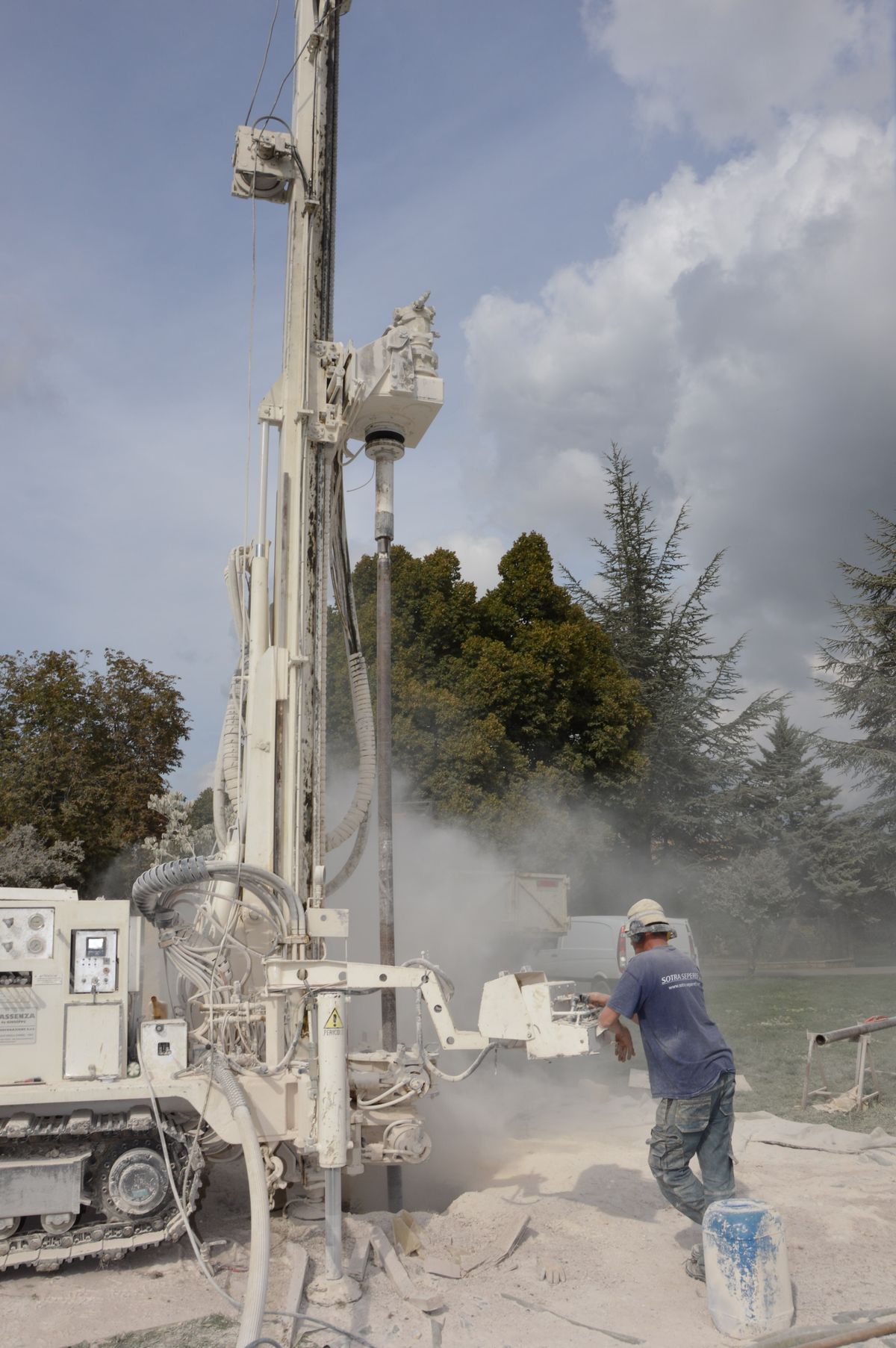
One of the most common questions Everest Drilling receives is: what does a borehole cost in the Eastern Cape? The honest answer is that there is no single figure — borehole cost is site-specific, and the Eastern Cape's variable geology makes this especially true. What we can do is explain the four main cost factors so you can understand what drives the price and what to expect when you request a quotation.
The four factors that determine borehole cost in the Eastern Cape are:
- Geophysical survey
- Drilling depth
- Pump system
- Overhead storage tank
Factor 1: Geophysical Survey
Geophysical Survey
An electromagnetic geophysical survey is conducted before drilling begins. It maps subsurface fracture zones and identifies where groundwater is most likely to be found at a productive depth. Without a survey, you are drilling blind — the risk of reaching the target depth and finding insufficient water is significantly higher.
The survey identifies the best drill point on your property. In the Eastern Cape, this is particularly important because groundwater in Karoo-type geology tends to concentrate along specific fracture zones rather than being evenly distributed through the rock. Drilling in the wrong location — even a few metres from the optimal point — can mean the difference between a productive borehole and a marginal one.
The survey cost is a relatively small portion of the total project cost, and it can save considerably more by avoiding a dry or underperforming result. Everest Drilling recommends a geophysical survey before every project. See: Why a Geophysical Survey Saves Money.
Factor 2: Drilling Depth
Drilling Depth — Site-Specific
Drilling cost is calculated per metre drilled. The deeper the borehole, the higher the cost. In the Eastern Cape, the depth required to reach a productive aquifer varies considerably depending on the underlying geology at your specific site.
The Eastern Cape spans two major geological domains that affect borehole depth:
- Karoo Supergroup sedimentary formations — mudstones, siltstones, and sandstones that make up much of the interior. Groundwater occurs in fracture zones and between bedding planes. Depths vary widely.
- Dolerite intrusions — hard igneous rock that has intruded through the Karoo sediments as sills and dykes. Dolerite is significantly harder to drill than sedimentary rock and slows drilling progress. Contact zones between dolerite and sediment are often productive aquifer zones.
Everest Drilling's capability extends to 250 metres depth. The depth quoted for your project is determined by the geophysical survey findings and local geological knowledge of your area. Everest Drilling guarantees the depth of the borehole as quoted and drilled.
Why depth cannot be quoted without a survey: Quoting a depth before a survey is conducted is essentially guesswork. A geophysical survey identifies the target depth — the depth at which a productive fracture zone is anticipated. This allows an accurate depth-based quotation. Without the survey, any depth estimate carries significant uncertainty.
Factor 3: Pump System
Pump System — Submersible or Solar
Once the borehole is drilled and cased, water needs to be brought to the surface. This requires a submersible pump sized to your borehole's yield and your property's demand. The pump system cost depends on the pump capacity, installation depth, and whether it is electrically powered or solar-powered.
There are two primary pump configurations:
- Grid-connected submersible pump — runs on Eskom electricity. Lower upfront cost, but creates a dependency on grid power. During load shedding, the pump does not run unless a generator or inverter backup is added.
- Solar-powered submersible pump — a solar panel array powers the pump directly or via a charge controller and battery bank. Higher upfront cost but eliminates the Eskom dependency entirely. Particularly suited to the Eastern Cape's climate and to farms and rural properties where grid power is expensive or unreliable.
Pump sizing is based on your borehole's sustainable yield (how much water it can supply per hour without declining) and your property's daily consumption demand. Everest Drilling sizes and installs the pump as part of the full turnkey installation.
Factor 4: Overhead Storage Tank
Overhead Tank — Size and Height
An overhead storage tank is the recommended completion for any borehole system. The pump fills the tank when water is needed; the tank provides gravity-fed pressure to the property without the pump needing to run continuously. The cost of the tank structure depends on its capacity (in litres) and the height of the support structure required to achieve working water pressure.
An overhead tank decouples the pump runtime from your water use — you can draw water at any flow rate the tank allows, regardless of pump speed. It also provides a buffer in the event of pump downtime or a brief period of reduced borehole yield.
Tank sizing considers:
- Daily water consumption for the property (household, livestock, irrigation)
- The borehole's sustainable yield — a lower-yielding borehole requires a larger tank buffer
- The height required to generate working pressure for the distribution system
Every Project is Quoted Individually
Borehole drilling cost in the Eastern Cape depends on your site's geology, the depth required, the pump system selected, and your tank requirements. Contact Everest Drilling for a project-specific quotation.
Request a QuoteWhy a Survey Should Come First
Before any cost discussion about drilling depth or pump system makes sense, the geophysical survey provides the foundation. The survey tells you where to drill and to what target depth — without it, all other cost estimates are speculative.
Everest Drilling recommends a survey for every project, regardless of size. The cost of a survey is small relative to the total project cost, and the risk reduction it provides is significant — particularly in the Eastern Cape where geology can change markedly over a short distance.
Read more: Why a Geophysical Survey Saves Money on Your Borehole Project
What a Complete Borehole Installation Includes
When comparing quotes from different drilling companies, it is essential to understand what is — and what is not — included. An incomplete quote may look cheaper but exclude key components that you will pay for separately. A complete borehole installation from Everest Drilling includes the following components:
- Geophysical survey — electromagnetic survey to identify the best drill point and target depth before any drilling begins
- Drilling to target depth — rotary percussion drilling with a capacity to 250 metres
- Steel casing — installed for the upper section of the borehole to prevent collapse and surface water contamination
- Borehole development — air development to clear drill cuttings and open fractures for improved yield
- Test pumping and yield assessment — confirms the sustainable yield before pump selection
- Submersible pump supply and installation — sized to your borehole yield and property demand; grid-connected or solar
- Rising main and electrical wiring — bringing water from the pump to the surface and connecting the control panel
- Overhead storage tank and support structure — recommended for all installations to provide gravity-fed pressure and yield buffering
Every project quotation from Everest Drilling clearly lists what is included. If a quote you receive from any company does not specify these components individually, request a line-by-line breakdown before agreeing to proceed.
The depth guarantee: Everest Drilling guarantees the borehole depth as quoted and drilled. The depth is established by the geophysical survey and confirmed in writing before drilling begins. You will not be charged for additional depth beyond what was agreed, unless scope changes during drilling and you authorise the change.
Common Mistakes That Increase Borehole Cost
Many property owners end up spending significantly more than necessary on their borehole project. Here are the most common reasons — and how to avoid them:
Skipping the Geophysical Survey
Choosing a drill point based on where a borehole was drilled nearby, or where a neighbour had success, is not a substitute for a proper electromagnetic survey. Every property's subsurface is different. Drilling without a survey increases the risk of reaching target depth without finding a productive aquifer — a result that still has to be paid for.
Accepting an Incomplete Quote
A quote that covers drilling only — without pump, tank, or installation — can look significantly cheaper than a turnkey quote. The problem is you will need all these components regardless, and adding them piecemeal later often costs more than including them from the outset. Always compare quotes on a like-for-like, full-installation basis.
Undersizing the Pump or Tank
A pump sized to the borehole yield without accounting for peak demand, or a tank too small to buffer a low-yield borehole, leads to running water shortages and early pump wear. Proper sizing at the design stage costs nothing extra compared to remedying a poorly sized system after installation.
Choosing the Lowest Quote Without Verifying the Driller
Borehole drilling in South Africa does not require a licence to operate, which means unqualified operators can and do offer services. A low quote that excludes the survey, uses sub-standard casing, or does not include test pumping may deliver a result that fails quickly or never reaches productive yield. Check that the company has verifiable experience and equipment appropriate for the depth required.
Questions to Ask Before You Sign
Whether you contact Everest Drilling or any other company for a quotation, these are the questions that will help you make an informed decision:
- Is a geophysical survey included, and who conducts it? The survey should be conducted by a qualified geophysicist or experienced technician using electromagnetic equipment — not a dowser or visual assessment.
- What depth does the quote cover, and how was that determined? The depth should be based on survey findings, not an arbitrary standard depth.
- Is the depth guaranteed? A reputable driller guarantees the depth as quoted. If depth is not guaranteed in writing, proceed with caution.
- What casing is included and for how many metres? Steel casing for the upper section is standard. Understand exactly what is included.
- Does the quote include pump supply, installation, rising main, and wiring? Or is the quote for drilling only?
- Is the overhead tank and structure included? If not, request a separate quote for this component.
- What happens if the borehole does not reach productive yield? Understand the policy before drilling begins.
Areas We Serve in the Eastern Cape
Everest Drilling operates across the Eastern Cape from branches in Dutywa, Lusikisiki, Kokstad, and Mthatha. Our rigs cover all major towns and surrounding rural areas across the province, including:
- East London and the Buffalo City region
- Mthatha and the OR Tambo District
- Port St Johns and the Wild Coast
- Butterworth and Mnquma Local Municipality
- Lusikisiki and the Ingquza Hill area
- Dutywa and the Amahlathi region
- Kokstad and the Harry Gwala District
- Mount Frere, Matatiele, and the Maluti area
- Komani (Queenstown) and the Enoch Mgijima region
- Aliwal North and the Joe Gqabi District
- Graaff-Reinet and the Karoo interior
- Cradock and Midlands farmland
If your property is not listed above, contact us — our rigs travel to any accessible site across the Eastern Cape and beyond.
Frequently Asked Questions
How much does a borehole cost in the Eastern Cape?
Borehole cost in the Eastern Cape depends on four main variables: the geophysical survey, the depth drilled, the pump system selected, and the overhead storage tank. Each of these is site-specific. Because geology varies considerably across the province — from Karoo sedimentary zones to dolerite intrusions — there is no single price that applies to all properties. Contact Everest Drilling for a project-specific quotation.
Why are borehole costs site-specific in the Eastern Cape?
The Eastern Cape has variable geology — Karoo sedimentary formations and dolerite intrusions create dramatically different drilling conditions across short distances. The depth required to reach a productive aquifer, and the drilling difficulty in rock versus sediment, both affect the final cost. A geophysical survey is essential before any cost estimate can be provided.
Does a geophysical survey add to the cost?
A geophysical survey is recommended before every borehole project. It identifies the best drill point and reduces the risk of drilling to a dry or underperforming result. By directing the drill to the most promising location, the survey reduces the risk of a costly dry result — making it a cost-saving measure overall rather than an added expense.
What is included in a full borehole installation?
A complete installation includes: geophysical survey, drilling to target depth, steel casing, borehole development, test pumping and yield assessment, submersible pump supply and installation (grid or solar), rising main and wiring, and an overhead storage tank with support structure. Always verify that a quote covers all these components — a drilling-only quote excludes the pump and tank, which are essential to a working water supply.
How long does borehole drilling take in the Eastern Cape?
The drilling phase typically takes one to three days depending on the depth required and the rock type encountered. Dolerite intrusions drill slower than Karoo sedimentary formations. The geophysical survey is usually conducted the day before drilling. Pump installation and tank construction follow after drilling and borehole development are complete. Most projects are fully commissioned within a week of the survey date, weather and site access permitting.
What is borehole yield and why does it matter?
Yield is the sustainable rate at which water can be drawn from the borehole without the water level dropping to the pump intake — measured in litres per hour. A higher yield means more water is available per day. Yield is measured by test pumping after drilling and determines the pump size and the storage tank capacity required to meet your property's demand reliably.
Can I use borehole water for drinking in the Eastern Cape?
Borehole water is widely used for agriculture, livestock, irrigation, and general domestic purposes across the Eastern Cape. For drinking and cooking, a water quality test is recommended. Water chemistry varies by area — Karoo groundwater can have elevated dissolved solids or fluoride in some zones. A laboratory water analysis confirms suitability for potable use and is a straightforward, low-cost step.
What is the difference between a solar borehole pump and a grid-connected pump?
A grid-connected submersible pump runs on Eskom electricity with a lower upfront cost but creates a dependency on grid supply — during load shedding, the pump stops unless a backup generator or inverter is added. A solar-powered pump uses solar panels to power the pump directly or via a battery bank, eliminating the grid dependency entirely. For farms and rural Eastern Cape properties, solar is often the more reliable and cost-effective long-term option.
Does Everest Drilling guarantee the borehole depth?
Yes. Everest Drilling guarantees the borehole depth as quoted and drilled. The depth is confirmed in writing in the project quotation before drilling begins. You will not be charged for depth beyond what was agreed unless scope changes during drilling and you expressly authorise the change.
Related Articles
Get a Project-Specific Quotation
Borehole cost in the Eastern Cape depends on your site. Contact Everest Drilling to discuss your property and receive a quotation based on your specific geology and requirements.