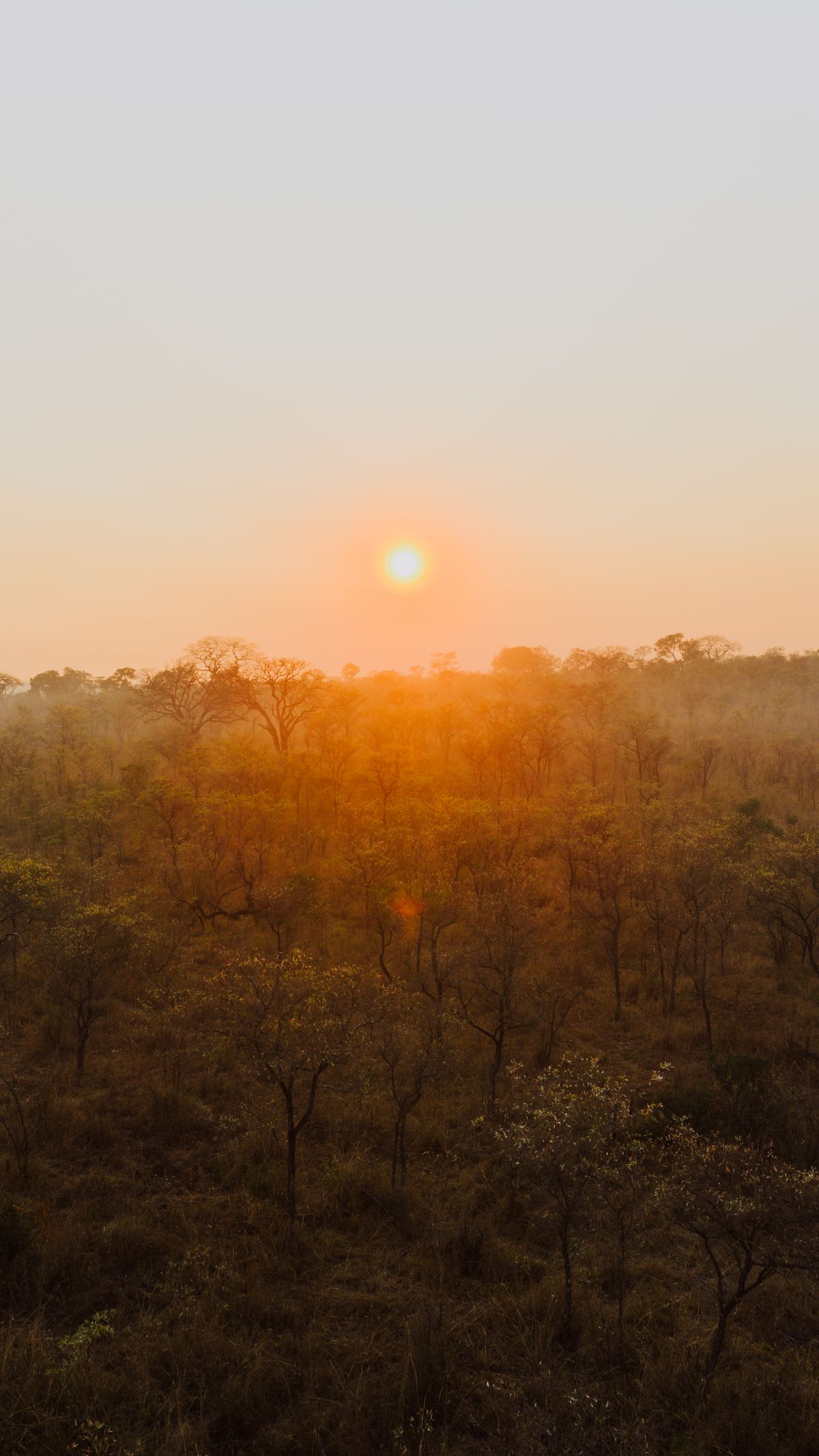
The Eastern Cape is one of South Africa's most geologically varied provinces. From the semi-arid Karoo interior to the lush Wild Coast hills, from the river valleys of the Buffalo and Kei to the dolerite-dominated highlands around East London — the geology shifts substantially across relatively short distances, and those shifts have direct consequences for borehole drilling: where to drill, how deep to go, how hard the rock is, and what kind of yield to expect.
This article is not a geology lecture. It is a practical guide for property owners, farmers, and project managers who need to understand how the rock beneath their Eastern Cape site affects the borehole drilling process and what they can realistically expect from a borehole in their area.
Overview: What Eastern Cape Geology Means for Drilling
Underground water in the Eastern Cape — as in most of South Africa — does not exist as underground rivers or lakes that a drill can tap into directly. It exists in aquifers: zones of rock that are sufficiently porous or fractured to store and transmit water. The drilling process is the search for those fractures and porous zones, guided by surface geology, local groundwater knowledge, and geophysical survey data.
Three broad geological settings dominate the Eastern Cape, and each has distinct implications for the driller:
- Karoo Supergroup sedimentary rocks — mudstones and sandstones that underlie most of the province's interior. They are relatively soft, drill quickly, but water-bearing fractures are localised and not always shallow.
- Dolerite intrusions — hard igneous rock that has intruded through the Karoo sediments in dykes and sills. Drilling through dolerite is slow and hard on equipment, but the contact zones between dolerite and sedimentary rock are often the most productive aquifer targets.
- Coastal and alluvial deposits — younger sediments along the coast and in river valleys, often shallow and highly productive, but variable in quality and extent.
Understanding which of these settings your site falls into — and identifying the water-bearing target within that setting — is precisely what a geophysical survey is designed to do before a drill rig is committed to a position.
Karoo Supergroup Dominance: Beaufort Group Mudstones and Sandstones
The majority of the Eastern Cape interior — the Karoo, the Midlands, the Graaff-Reinet area, Cradock, Queenstown, and large parts of the Chris Hani and Joe Gqabi districts — sits on the Karoo Supergroup, specifically the Beaufort Group. These rocks are sedimentary: layered mudstones, siltstones, and sandstones deposited in river and floodplain environments roughly 250 million years ago.
For the borehole driller, Karoo sediments are moderately soft rock. A rotary air percussion drill bit penetrates Karoo mudstones and sandstones at a reasonable rate — significantly faster than hard igneous rock. This means that in pure Karoo terrain, metre rates are better and drilling costs per metre are lower than in dolerite-dominated areas.
The challenge in Karoo terrain is that the sediments themselves have very low primary porosity — water does not flow freely through the rock matrix. Instead, water is stored and transmitted in fractures and joints in the rock. These fractures are the target, and they are not uniformly distributed. A borehole sited randomly in Karoo terrain may intercept no productive fractures whatsoever. A borehole positioned after a geophysical survey has been interpreted — where the survey's resistivity data indicates a fracture zone — has a far better chance of striking water at a useful yield.
Depths in Karoo sediment terrain in the Eastern Cape typically range from 40 m to 120 m before a productive fracture is intercepted, though this varies considerably. The site-specific (geophysical survey required) answer to "how deep will you need to drill?" is the most honest one that any experienced driller will give.
Dolerite Dykes and Sills: Hard Rock Targets with High Reward
One of the most significant geological features of the Eastern Cape — and of the Karoo Basin generally — is the pervasive network of dolerite intrusions. At various points during the Jurassic period, magma forced its way upward through the Karoo sediments and spread horizontally between rock layers. These intrusions solidified as dolerite — a hard, dark igneous rock that is far more resistant to drilling than the surrounding mudstones.
Dolerite intrudes in two forms:
- Dykes — vertical or steeply inclined sheets of dolerite that cut across the bedding of the Karoo sediments. Dykes appear as linear ridges in the landscape and are often visible on aerial photography and satellite imagery.
- Sills — horizontal or gently inclined sheets of dolerite that intruded between sediment layers. Sills form the characteristic flat-topped hills (koppies) of the Karoo landscape.
From a drilling perspective, dolerite presents two challenges and one significant opportunity:
Challenge 1 — Drill rate: Dolerite is extremely hard. Penetration rates drop to a fraction of what is achieved in the surrounding sedimentary rock. Drill bits wear faster, air pressure requirements are higher, and the rig works harder per metre. This is reflected in higher drilling costs per metre in dolerite-heavy terrain.
Challenge 2 — Aquifer isolation: Thick dolerite sills can act as barriers to groundwater flow. If a productive aquifer zone lies below a sill, the drill must pass through the entire sill before reaching the target. Sills in the Eastern Cape can range from a few metres to over 100 m thick.
The opportunity — Contact zones: Where dolerite contacts the surrounding Karoo sediment, the heat of the intrusion baked and fractured the adjacent rock. These contact metamorphic zones are frequently the most productive aquifer targets in the Eastern Cape Karoo. The fractured, altered rock on both sides of the dolerite body stores and transmits water far more effectively than unaltered mudstone. Identifying the position of these contact zones — from the surface, before drilling — is one of the primary objectives of a geophysical survey in dolerite terrain.
Field note: In the Eastern Cape Karoo, a drill intersecting a dolerite dyke is not a failure — it is often a positive sign. The contact zones on either side are frequently the water-bearing targets. The driller reads the air returns and the cutting samples carefully around dolerite contacts to decide whether to continue through or to develop the zone at that depth.
Eastern Cape Coastal Zone: Alluvials and River Valley Aquifers
The coastal fringe of the Eastern Cape — from the Garden Route boundary in the west through to the Wild Coast in the east — is underlain by geological formations that are fundamentally different from the Karoo interior. Here, younger sediments include aeolian (wind-blown) sands, marine deposits, and critically, alluvial sequences in the river valleys.
The major rivers of the Eastern Cape — the Buffalo (which flows through East London), the Kei, the Umtata (Mthatha River), the Nahoon, and numerous smaller coastal rivers — have deposited sequences of sand and gravel in their valleys over geological time. These alluvial deposits function as excellent shallow aquifers: the pore spaces between the sand and gravel particles hold large volumes of water, and the permeability of alluvial material is high, meaning water flows readily into a well or borehole.
For drilling in or near river valleys, the practical implications are:
- Water is often encountered at relatively shallow depths — frequently between 15 m and 50 m in alluvial zones
- Drill penetration rates in unconsolidated or semi-consolidated alluvial sediments are fast, keeping drilling times short
- Yields from alluvial aquifers can be high compared to fractured rock aquifers
- Casing requirements are more important in alluvial zones — the unconsolidated material around the borehole requires proper steel or PVC casing to prevent collapse and to keep fine sand out of the pump
Away from river valleys, the coastal zone transitions to Cretaceous and Tertiary sedimentary formations — mudrocks, limestones, and sandstones — which have moderate groundwater potential. Boreholes in these formations typically target fracture zones and are drilled to moderate depths.
Wild Coast Conditions: Mthatha, Lusikisiki, Port St Johns
The Wild Coast — roughly the area from the Kei River north to the KwaZulu-Natal border, encompassing OR Tambo District Municipality and parts of Alfred Nzo District — is one of the highest-rainfall regions in the Eastern Cape. Annual rainfall in the Lusikisiki, Port St Johns, and Mthatha areas regularly exceeds 1 000 mm, and in some escarpment zones approaches 1 400 mm.
The combination of high rainfall and Karoo Supergroup geology has produced conditions that are generally favourable for groundwater in the Wild Coast region:
- High rainfall means sustained recharge of aquifers — the fracture systems in Karoo sediments are kept relatively full compared to lower-rainfall Karoo interior areas
- Weathered Karoo sediments near the surface — the result of intense chemical weathering in the humid climate — form a weathered zone aquifer that can be productive at relatively shallow depths
- Dolerite intrusions are present but less dominant than in the drier interior, and weathering of dolerite contacts has created extensive fractured zones
- Alluvial sequences along the numerous coastal rivers provide additional shallow aquifer targets
Drilling in the Wild Coast region is generally productive, but access can be a constraint. The road network in parts of OR Tambo District is challenging for heavy drill rigs, particularly during the rainy season. Everest Drilling's Eastern Cape operations are experienced in navigating these access conditions, and site-specific access assessment is part of the pre-drilling consultation process.
Alfred Nzo District: Border Highlands and Fractured Rock Targets
The Alfred Nzo District — encompassing Mount Frere, Matatiele, Kokstad (straddling the KZN border), and the surrounding highlands — sits in the transition zone between the Eastern Cape and the Drakensberg escarpment. The geological setting here is more varied than in the coastal or Karoo zones.
Mount Frere / Ntabankulu Area
Predominantly Beaufort Group Karoo sediments, with significant dolerite intrusion. High rainfall (700–900 mm/year) keeps aquifer recharge good. Typical borehole targets are dolerite contact zones at moderate depths. Drilling is achievable but dolerite hardness slows penetration rates through the intrusive bodies.
Matatiele and Highlands Zone
The Matatiele area sits at higher elevation with Karoo sediments overlying basement geology in places. Fractured rock aquifers at 40–100 m are typical targets. Rainfall is lower here than the Wild Coast but still adequate for aquifer recharge. Cold winters mean frost considerations for surface infrastructure but do not affect the drilling process itself.
Kokstad Surrounds
Kokstad itself straddles the border with KwaZulu-Natal and the geology reflects this transition — a mix of Karoo sediments, dolerite, and in places basement granite and gneiss. Where basement rocks are encountered, drilling is in very hard material but fracture yields from basement aquifers can be sustained and reliable. Depth to water varies considerably — a geophysical survey is particularly important in areas with mixed geology.
East London and Buffalo City: Dolerite-Dominant Urban Drilling
East London and the Buffalo City Metropolitan Municipality represent the most urbanised drilling environment in the Eastern Cape. The geology of the East London area is dominated by dolerite at and near the surface — thick sills that cap the Karoo sediments form the hard platform on which much of East London is built. The recognisable flat hilltops of the East London suburbs are the surface expression of these dolerite sills.
For borehole drilling in East London and surrounds, the practical picture is:
- Dolerite from near-surface: In many East London properties, the drill encounters dolerite within the first 10–30 m. The rate of penetration in dolerite is much slower than in sedimentary rock, and this is reflected in drilling costs. This is not a barrier — Everest Drilling's rigs are specified for hard rock drilling — but it should be understood at the planning stage.
- Water in fracture zones below the sill: Productive water-bearing fractures in the East London area are typically found in the fractured Karoo sediments beneath the dolerite sill, or in fracture zones within the dolerite itself. The drill must penetrate through the competent dolerite to access these zones.
- Depth expectations: Productive zones are commonly encountered between 40 m and 100 m in the East London area. Shallower productive zones exist where the sill is thin or absent, deeper drilling may be needed on sites with thick sills. Site-specific assessment is essential.
- Urban access: In East London's established suburbs — Beacon Bay, Nahoon, Gonubie, Vincent — drilling access must be carefully planned. Overhead power lines, boundary walls, garden trees, and paved driveways all affect rig positioning. Everest Drilling includes a pre-drilling site visit to confirm access before mobilisation.
The Buffalo River valley, running through East London, offers the one exception to the dolerite-dominated picture: alluvial deposits in the valley floor provide a different (and generally shallower) drilling target for properties in close proximity to the river corridor.
How Everest Drilling Adapts to Each Geological Setting
The diversity of geological conditions across the Eastern Cape is precisely why Everest Drilling does not apply a single approach to every borehole project. The process begins with a geophysical survey — electrical resistivity tomography (ERT) or electromagnetic (EM) profiling of the site — to map the subsurface before any drilling commitment is made. The survey identifies the likely position and depth of water-bearing fractures, guides the optimal siting of the borehole, and gives Everest Drilling the formation information needed to select the right drill bit, air compressor settings, and casing specification for the job.
Rig selection also varies by geology. In soft Karoo sediment terrain, a medium-capacity rotary percussion rig achieves good penetration rates. In hard dolerite terrain, a higher-capacity rig with heavier drill string and larger air compressor volume is required to maintain penetration and clear cuttings effectively. Drilling blind into unknown formation with an under-specified rig wastes time and money.
On the Wild Coast and in rural Alfred Nzo District, logistical adaptability matters as much as technical capability. Everest Drilling has experience mobilising equipment to remote sites where access roads require careful assessment, and where a detailed pre-mobilisation site visit is part of standard practice.
Everest Drilling guarantees the depth of the borehole as quoted and drilled. The geophysical survey is what enables an accurate depth quotation — by identifying the likely target zone depth before the rig moves. Contact us for a project-specific quotation for any Eastern Cape drilling project, and our survey and drilling teams will advise on what to realistically expect for your specific site and location.
Related Articles
Common Questions
Drilling in the Eastern Cape?
Everest Drilling operates across the Eastern Cape — from East London to the Wild Coast, from Karoo interior to the border highlands. A geophysical survey before drilling is the foundation of every successful project. Contact us for a project-specific quotation.